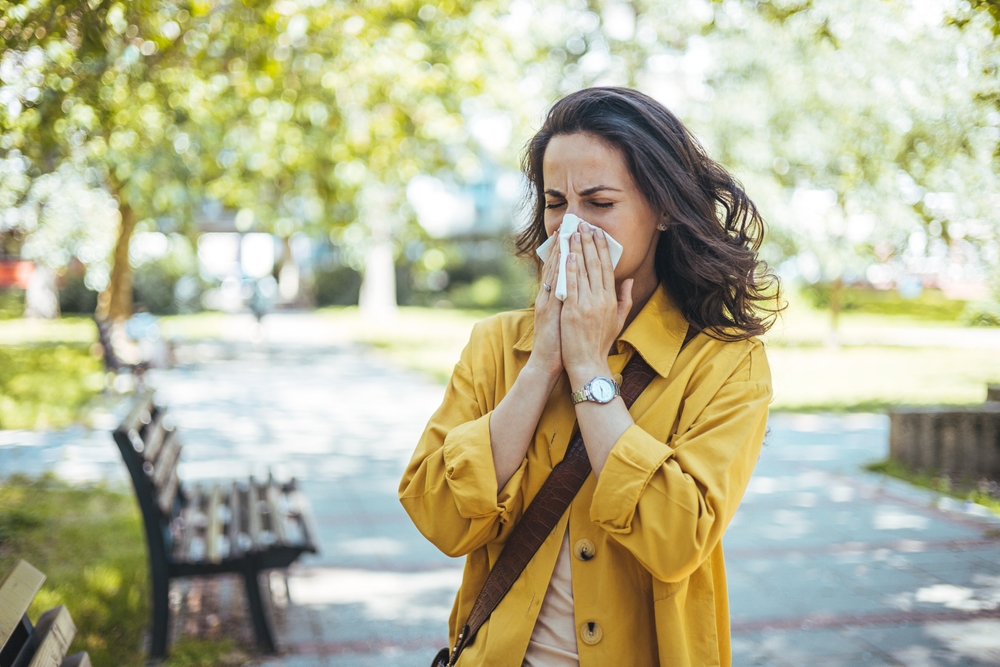
"Seasonal allergies might not seem like a big deal, but symptoms can be quite debilitating and miserable. They occur when the immune system overreacts to airborne pollen and allergens, causing sneezing, itchy and watery eyes, headaches, and congestion."
"The best way to prevent symptoms is to reduce pollens inside the home. This includes dusting regularly, changing bedsheets, using an allergen-friendly mattress and pillow cover, vacuuming at least twice a week, and using an air purifier with a HEPA filter."
"Quercitin and Butterbur have been shown to reduce inflammation and histamines, the chemical in the body that causes allergy symptoms. Vitamin C also has anti-inflammatory and antioxidant properties that can be helpful."
"Seasonal asthma occurs when asthma symptoms are exacerbated by seasonal allergens. Prevention is key when it comes to seasonal asthma. The goal is to reduce the exposure to seasonal allergens that can trigger an asthma attack."
Spring is associated with a rise in seasonal illnesses such as allergies and asthma. Allergies occur due to the immune system's reaction to pollen, leading to symptoms like sneezing and congestion. Preventive measures include reducing indoor allergens through cleaning and using air purifiers. If symptoms arise, nasal saline sprays and supplements like Quercitin, Butterbur, and Vitamin C can help. Seasonal asthma can worsen with allergens and weather changes, making prevention crucial by minimizing exposure to triggers.
Read at Alternative Medicine Magazine
Unable to calculate read time
Collection
[
|
...
]