"His sculptures tease out the ever-multiplying ways in which AI behemoths and other corporations turn our data into financial assets. The works have proven to be unforgettable two months after they went on show."
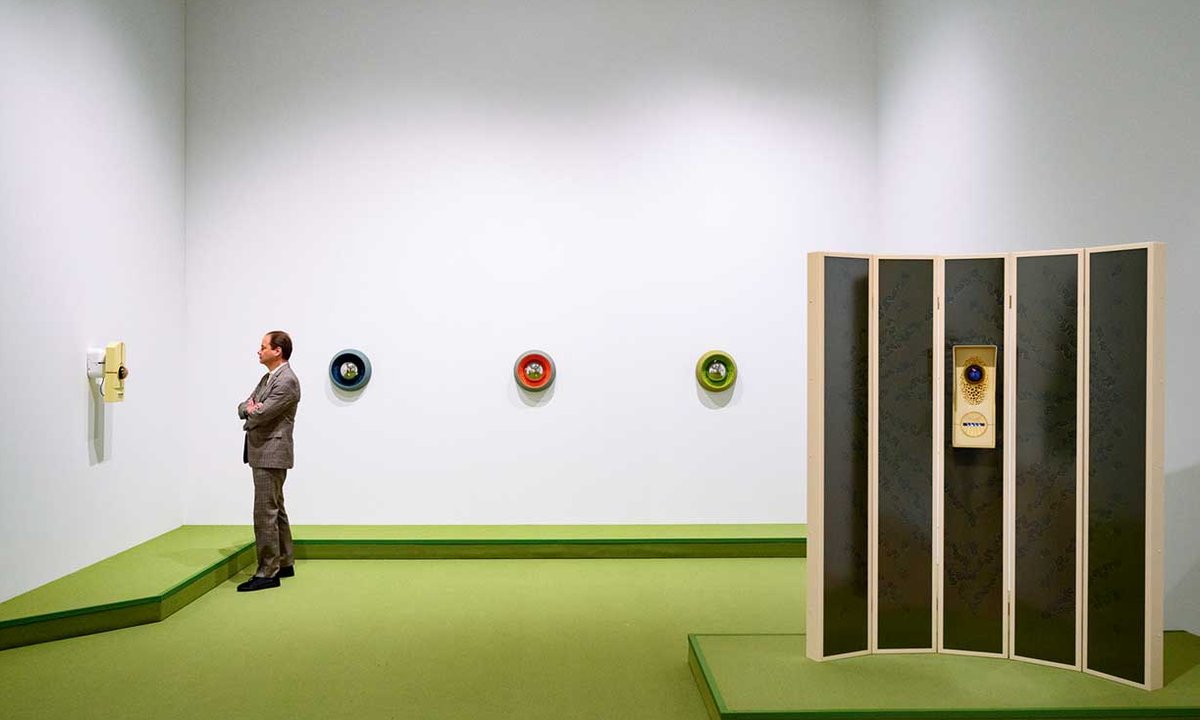
"At the biennial, Jacoby presents five works in a green-carpeted environment-a layout he thinks of as "almost like a rat trap, where you're pulled in with sound and then it grabs you." For each Estate work, the textual foundation is years' worth of social media content by an anonymous creative who died on the titular date."
"Jacoby's algorithms speak editorialised versions of the deceased's posts in a voice replicating one of his own friends or family members. The intercom's camera constantly scans the exhibition space for people and certain objects, for example food and drinks, then cues the model to surface related content from its subject's digital archive."
Cooper Jacoby emerges as a standout artist at the Whitney Biennial with sculptures that explore corporate data extraction and AI commodification. His five works occupy a green-carpeted space designed to immerse viewers. The Estate series features folding screens and wall-mounted pieces equipped with intercoms that generate vocal outputs from deceased individuals' social media posts. Jacoby trained AI models to speak algorithmically edited versions of archived digital content in voices resembling his friends and family members. Cameras scan the exhibition space, triggering related content from the subject's digital archive based on detected people and objects. A screen displays elapsed time since each person's death, emphasizing the ongoing extraction of value from deceased users' data.
#ai-and-data-commodification #contemporary-sculpture #digital-ethics #whitney-biennial #social-media-archives
Read at The Art Newspaper - International art news and events
Unable to calculate read time
Collection
[
|
...
]