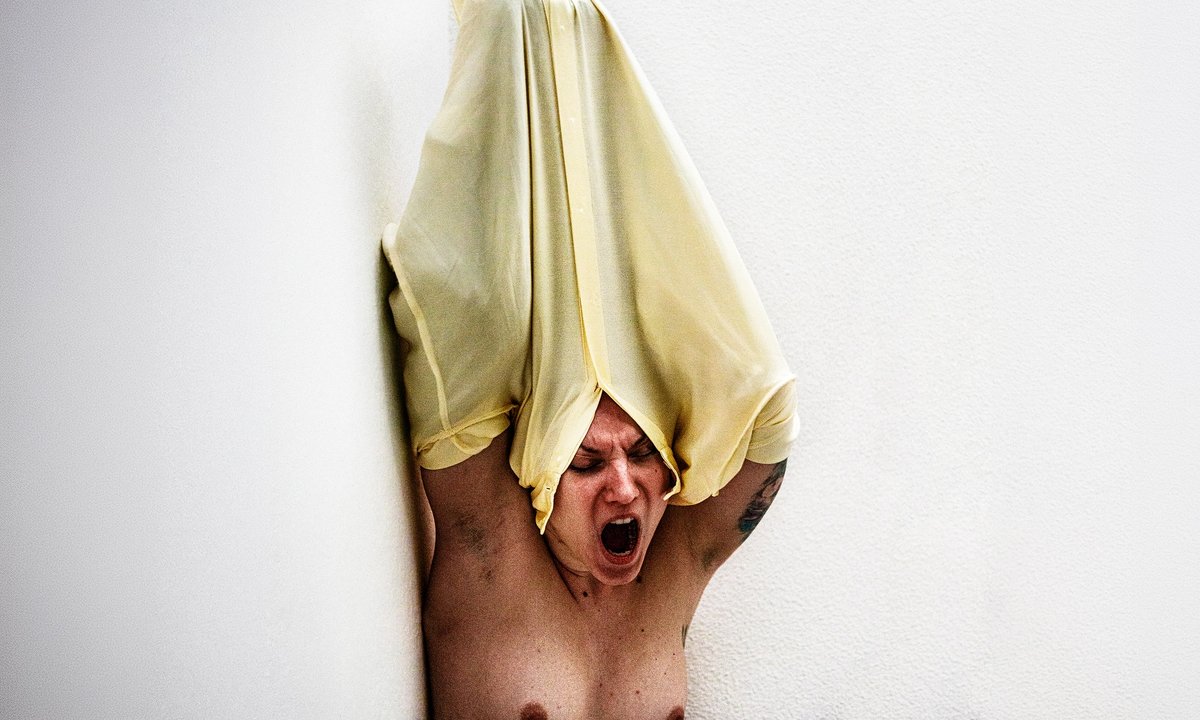
"We've placed a kind of veil of metal shutters over the building. It transforms what is normally an iconic, light-filled pavilion into a closed, bunker-like space. It is a representation of the Netherlands, or Europe, or the Global North as a space that is increasingly entrenched."
"What inspired me was the building itself, and the Giardini as a kind of time capsule. It represents a bygone era-idyllic, optimistic and comfortable. But at the same time, you can see cracks in the structure, the patches of mould."
Dries Verhoeven has altered the Dutch Pavilion at the Venice Biennale by covering it with metal shutters, creating a closed, bunker-like environment. This transformation symbolizes a shift from the pavilion's original modernist ideals, representing a more entrenched and isolated Europe. The pavilion, once a beacon of post-war optimism, now reflects societal cracks and challenges. Visitors can enter the space hourly to experience a performance that unfolds in darkness, emphasizing the contrast between past ideals and present realities.
Read at The Art Newspaper - International art news and events
Unable to calculate read time
Collection
[
|
...
]