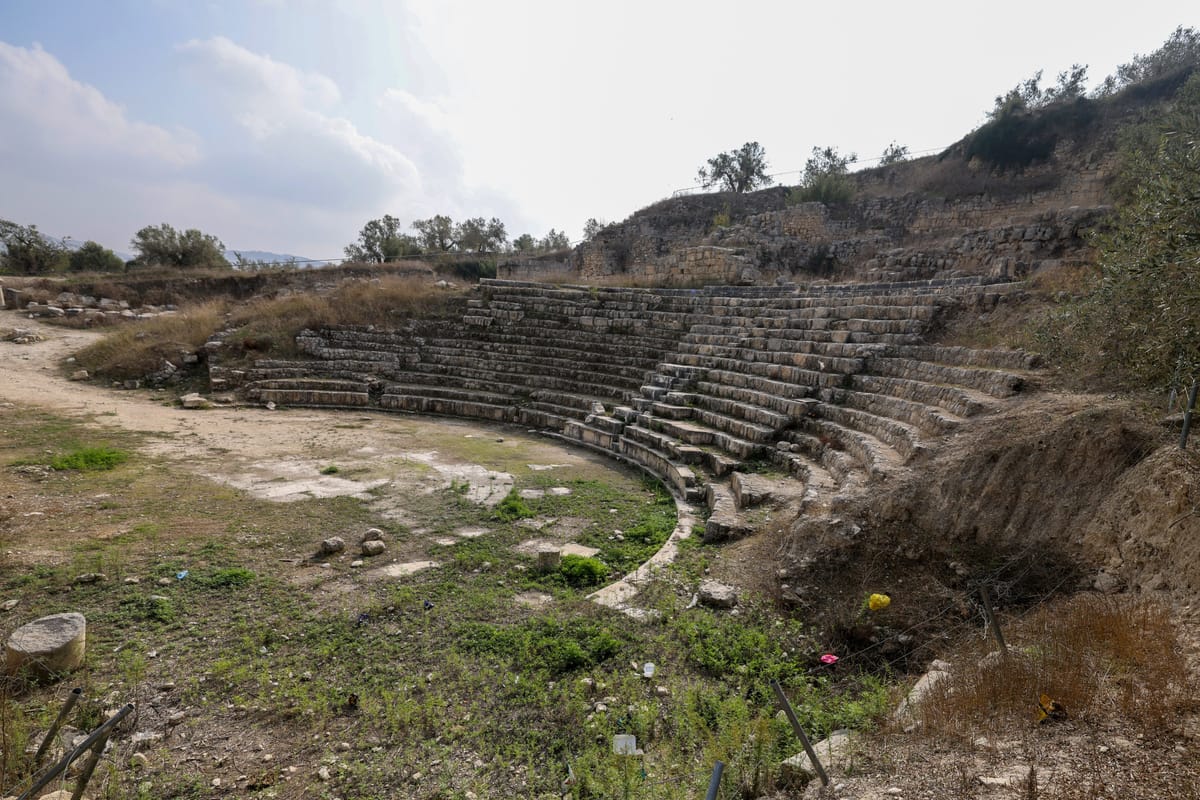
"the city of Sebastia, once known as Samaria (Shomron in Hebrew), served as the capital of the northern Kingdom of Israel during the Iron Age before the Assyrian invasion and takeover in 722 BCE. Continuously inhabited for approximately 3,000 years, Sebastia is a critical tapestry of archaeological and architectural ruins reflecting multiple eras of religious and imperial influence. The hilltop ruins sit within the boundary of the Occupied West Bank, a stone's throw away from the village, which is home to some 3,500 Palestinians."
"Israel's much-criticized plans for the site involve constructing a visitor center, a parking lot, and a fence around the area that would cut off villagers' access to the ruins and their olive orchards, effectively drying up their sources of income - tourism and olive-based products - entirely. An access road will reportedly connect Israel to Sebastia directly, without visitors having to pass through the Occupied West Bank town."
Palestinian residents in Sebastia, a West Bank village of 3,500 people, fear losing access to their history and livelihoods due to an Israeli redevelopment plan. Sebastia, historically Samaria and once the capital of the northern Kingdom of Israel, contains 3,000 years of archaeological and architectural ruins including a derelict acropolis, a Roman amphitheater, remnants of an Augustan temple, and a Hellenistic tower. Planned construction of a visitor center, parking and a perimeter fence would cut villagers off from the ruins and their olive orchards, eliminating income from tourism and olive-based products. An access road would allow visitors to reach Sebastia from Israel without passing through the village.
Read at Hyperallergic
Unable to calculate read time
Collection
[
|
...
]