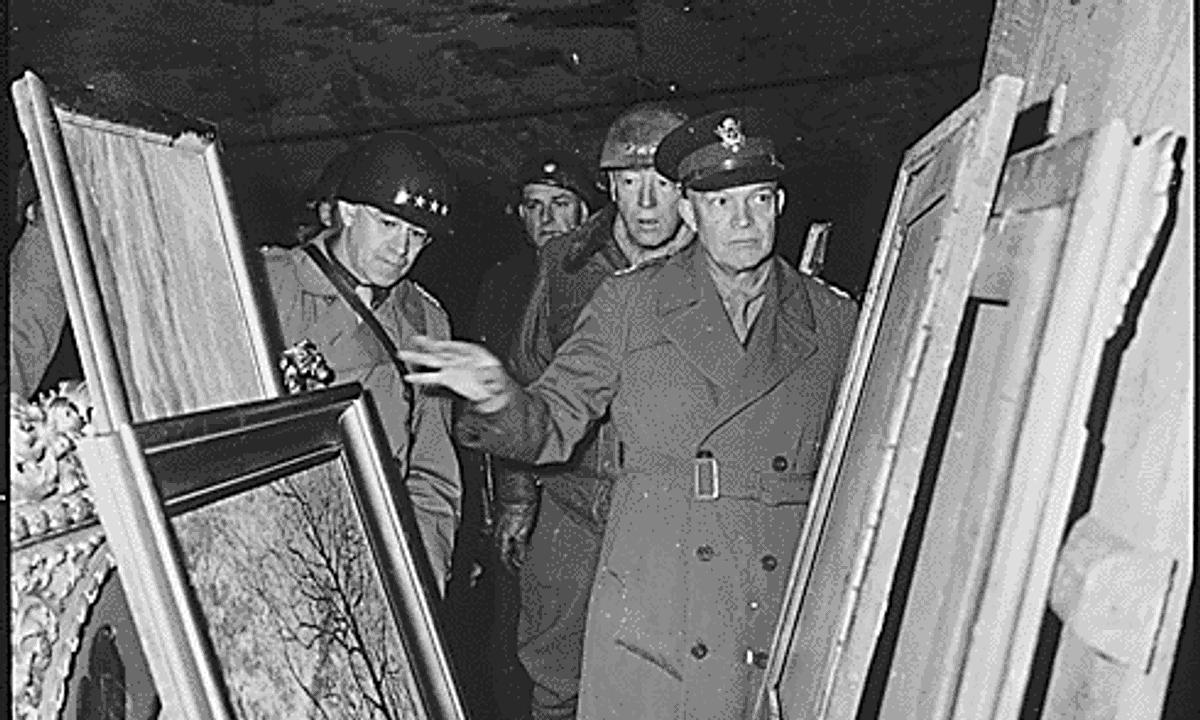
"The Hague Convention of 1954 ensures that countries prevent theft and pillage of cultural property during armed conflict, while a protocol to that convention prevents the export of such material, requiring other countries to seize unlawful exports and repatriate them at the end of hostilities."
"The problem is that the protocol is limited to situations of 'occupation' and therefore the arguably greater risk of looting in the chaos of war beyond formal occupation is left unaddressed."
"Experts usually say there is a delay of several years between conflict in a country and looted objects from that country entering the art market—and most often on the 'grey' market, which sits between the black market and the legitimate market."
The Hague Convention of 1954 addresses the protection of cultural property during armed conflict, yet looting remains a significant issue. While around 110 countries have signed a protocol to prevent the export of war loot, its limitations leave many situations unaddressed. The protocol primarily applies to 'occupation' scenarios, neglecting the chaos of war. UN Security Council Resolutions have targeted specific countries like Iraq and Syria, but similar measures for others, including Afghanistan and Ukraine, lack consensus. The art market often sees looted objects enter years after conflicts, complicating recovery efforts.
Read at The Art Newspaper - International art news and events
Unable to calculate read time
Collection
[
|
...
]