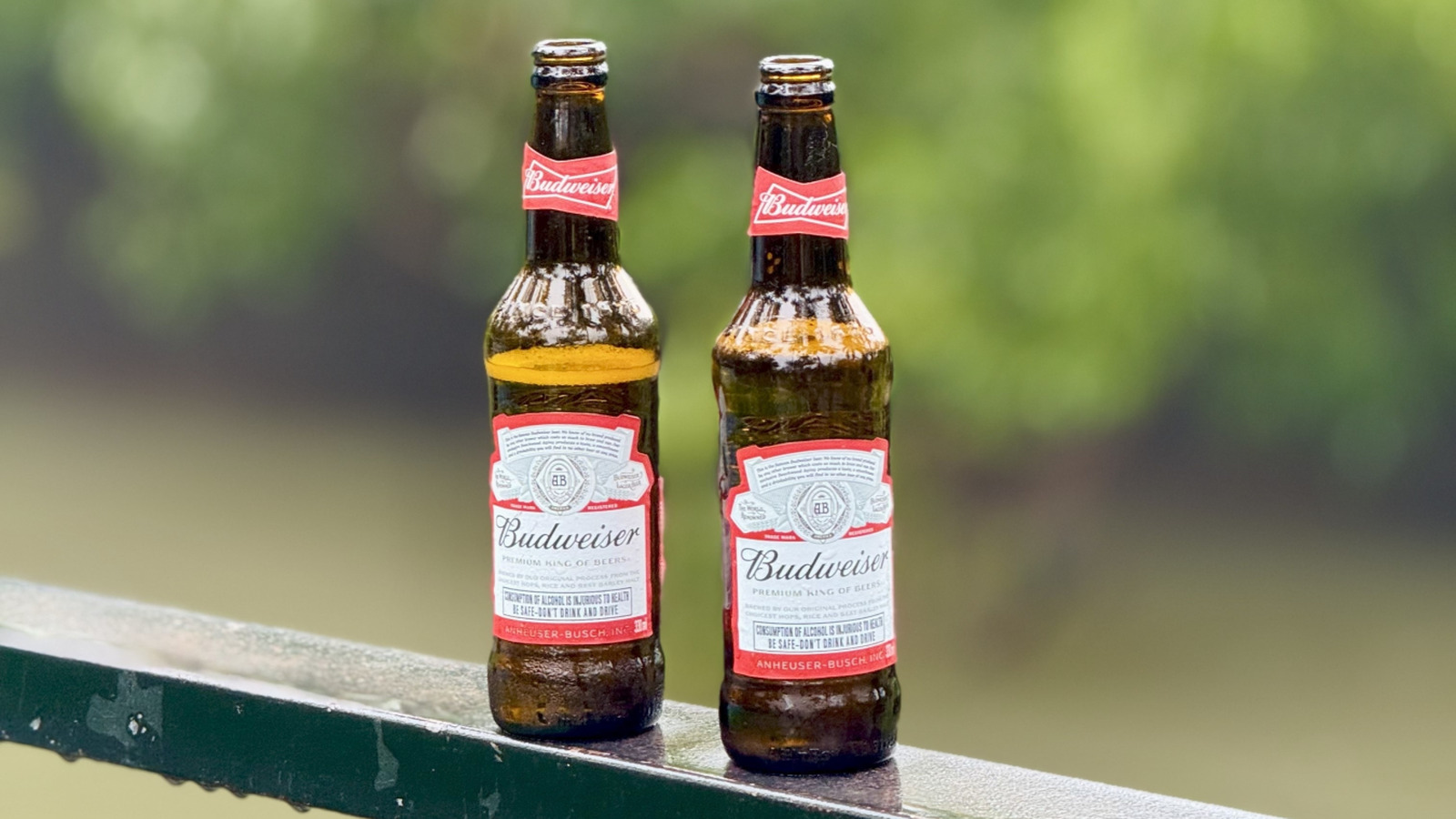
"Filed in 1876, the label is one of the oldest active American design mark registrations. The first Bud label was an intricate one meant to symbolize European inspiration and a quality that would attract American drinkers, helping cement it as one of the most popular beers."
"The recognizable AB at the center is the seal of Anheuser-Busch. The letters are nested inside a depiction of wheat and barley to represent beer-making ingredients, and golden eagles flank the design as a nod to American heritage. One of the eagles was initially designed after the German double-headed eagle but was redesigned after World War I to avoid any association with German symbolism."
"The name of the beer is derived from a German word meaning "of Budweis," a city that's now in the Czech Republic but back then was part of the Austro-Hungarian Empire. Budweiser was created by Adolphus Busch who was inspired by pilsners he tasted in Europe."
Budweiser's label is one of the oldest active American design mark registrations, originating from an 1876 design meant to symbolize European inspiration and attract American drinkers. The current label features the AB seal of Anheuser-Busch nested within wheat and barley imagery representing beer ingredients, flanked by golden eagles symbolizing American heritage. One eagle was redesigned after World War I to eliminate German associations. The beer's name derives from Budweis, a city in the Austro-Hungarian Empire, now Czech Republic. Founder Adolphus Busch created the name after tasting European pilsners. The slogan "King of Beers" inverted a historical descriptor for imperial brewery beer. The label's bold design and red background ensure brand recognition.
#budweiser-label-history #brand-heritage-and-symbolism #trademark-design-evolution #american-beer-marketing
Read at Tasting Table
Unable to calculate read time
Collection
[
|
...
]