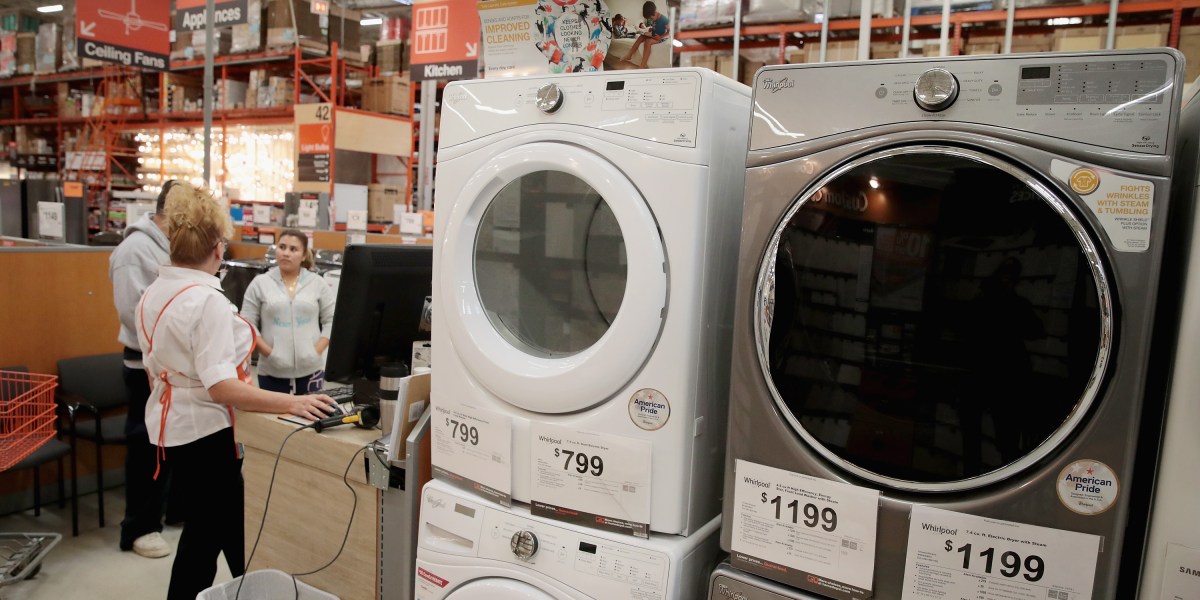
"“This level of industry decline is similar to what we have observed during the global financial crisis and even higher than during other recessionary periods,” Bitzer told analysts. Industry shipments fell 7.4% in the first quarter, with March alone plunging 10%. The scale of the downturn was framed as comparable to major recession conditions, indicating broad weakness across appliance demand rather than a narrow product issue."
"Puente, describing the segment's results, said the North America business experienced “recession-level industry contractions, with discretionary demand down approximately 15%.” The decline was tied to consumer behavior, with discretionary spending weakening enough to affect appliance purchases. The framing emphasized that the downturn was not limited to essentials, but reached categories dependent on consumer willingness to spend beyond necessities."
"“Ultimately, it's a decision against the confidence the consumer has about the financial future,” he said. “It's just a big-ticket item. It's not a $50 purchase.” With discretionary demand down approximately 15% in the quarter, consumers who did buy were trading down to cheaper models rather than upgrading, compressing not just volume but mix. The mechanism connected macro uncertainty to purchase timing and product selection."
"“Even consumers are holding back replacing product and rather repairing it,” he said. One of Whirlpool's strongest businesses in Q1 was spare parts and repair, reflecting a shift away from new purchases. Instead of upgrading appliances, consumers extended the life of existing products, which supported repair demand while weakening replacement-driven sales."
Industry shipments fell 7.4% in the first quarter, with March declining 10%. Whirlpool’s North America business saw recession-level industry contractions, with discretionary demand down about 15%. Executives linked the pullback to consumer confidence, intensified by heightened cost-of-living anxieties. The U.S. consumer sentiment index fell to the lowest level in 50 years in March. Appliances were described as highly sensitive to Americans’ financial outlook because they are big-ticket purchases. Consumers who bought shifted to cheaper models instead of upgrading, compressing both volume and product mix. Spare parts and repair remained strong, with consumers holding back on replacements and choosing repairs. Whirlpool reported an ongoing EBIT margin of 1.3% and ongoing earnings per share of -$0.56, including a non-cash loss tied to its mino.
Read at Fortune
Unable to calculate read time
Collection
[
|
...
]