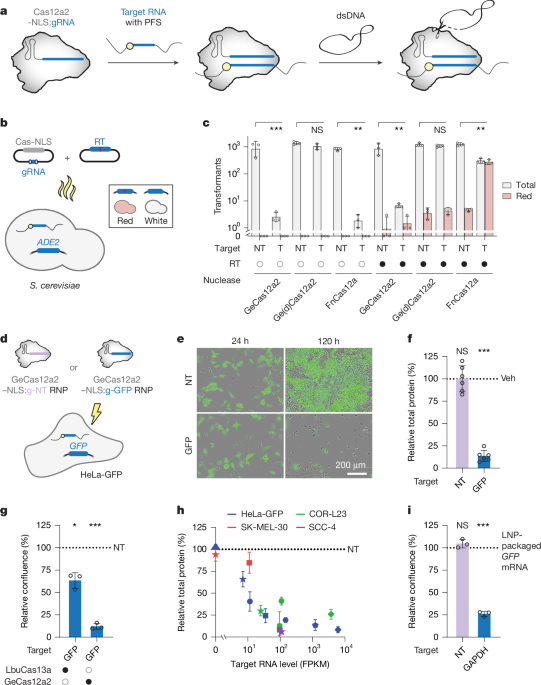
"Selectively eliminating cells, tissues and organisms based on their genetic or physiological identity has been a mainstay of the life sciences, crucial for removing diseased cells and eradicating pathogens."
"CRISPR nucleases, such as Cas9 and Cas12a, introduce targeted double-stranded DNA breaks, but in eukaryotic cells, these breaks are often repaired, limiting their effectiveness for programmed cell elimination."
"The ability to harness CRISPR nucleases for selective cell elimination could greatly broaden the range of targetable conditions, creating new means to counterselect against specific cells."
Selective elimination of cells based on genetic identity is crucial in life sciences. Traditional methods like small-molecule inhibitors and antibodies have limitations in targeting specific genetic states. CRISPR nucleases, which recognize DNA or RNA sequences, offer a promising alternative for targeted cell elimination. In bacteria, these nucleases effectively induce cell death, but their efficacy in eukaryotic cells is limited due to efficient DNA repair mechanisms. Targeting repetitive genomic elements may enhance their ability to induce cell death in eukaryotes.
Read at Nature
Unable to calculate read time
Collection
[
|
...
]