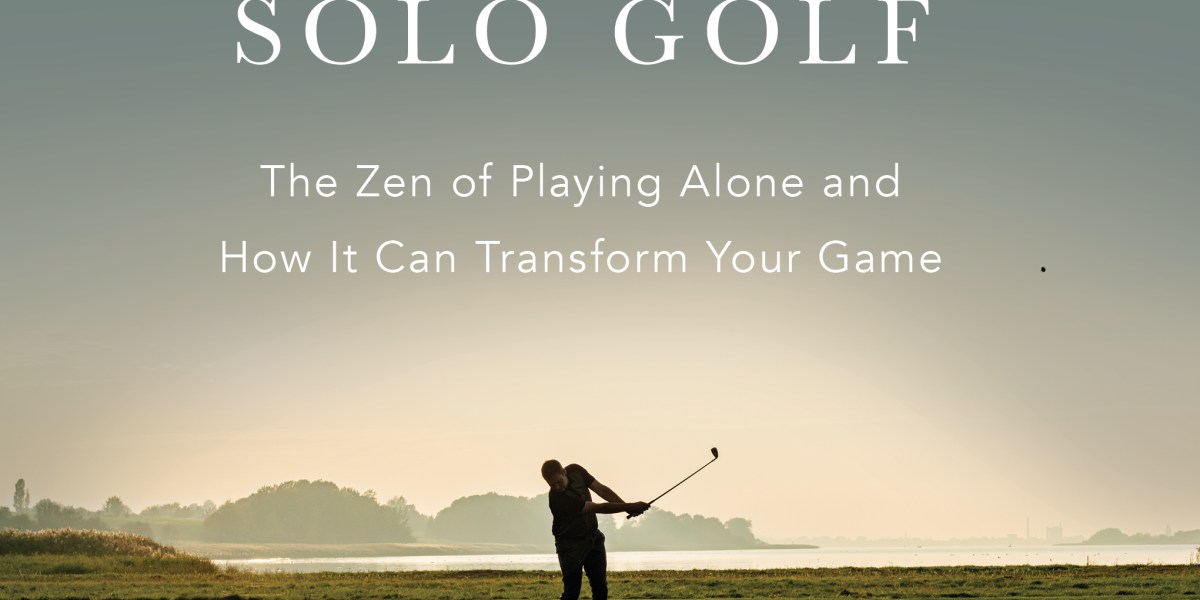
"For decades, golf has functioned as a kind of informal professional infrastructure - part networking event, part relationship builder, part slow-moving deal room. The cliché of golf as business lubricant exists for a reason. Entire careers have been nudged forward on tee boxes and sealed on greens. And historically, access to that world - particularly at private, often men-only clubs - was not just a matter of recreation but of opportunity, which is why it became a flashpoint in workplace equity debates."
"In other words, the sport has long been less about solitude than about proximity - to power, to colleagues, to possibility. Which is why suggesting that people should sometimes play alone can sound, at first pass, like a rejection of what makes the game professionally valuable - or valuable to professionals. But solo golf isn't a rejection. It's a complement."
"The argument of Solo Golf is not that you should abandon the foursome, the client round, or the leisurely walk-and-talk with colleagues. Those experiences have enduring value, both human and professional. The argument is that adding a solo practice - occasional rounds played entirely by yourself - can make those social rounds more meaningful and, perhaps counterintuitively, make you better at the very business functions golf has traditionally served."
"Because what golf offers in groups is connection. What it offers alone is something else entirely. Clarity, for one. Anyone who has spent time on a golf course knows that the game is as much mental as it is physical. It rewards focus, punishes distraction, and exposes the difference between intention and execution in ways that are often unco"
Golf has long functioned as informal professional infrastructure, combining networking, relationship building, and deal-making, especially through access to private clubs tied to opportunity and workplace equity debates. The sport has often been valued less for solitude than for proximity to power, colleagues, and possibility. Suggesting solo play can seem like rejecting golf’s professional value, but solo golf is presented as a complement rather than a replacement. The case is for adding occasional rounds played entirely by yourself to make social rounds more meaningful and to improve the business functions golf has historically served. Solo golf offers clarity, since the game is mental as well as physical, rewarding focus and exposing the gap between intention and execution.
Read at Fortune
Unable to calculate read time
Collection
[
|
...
]