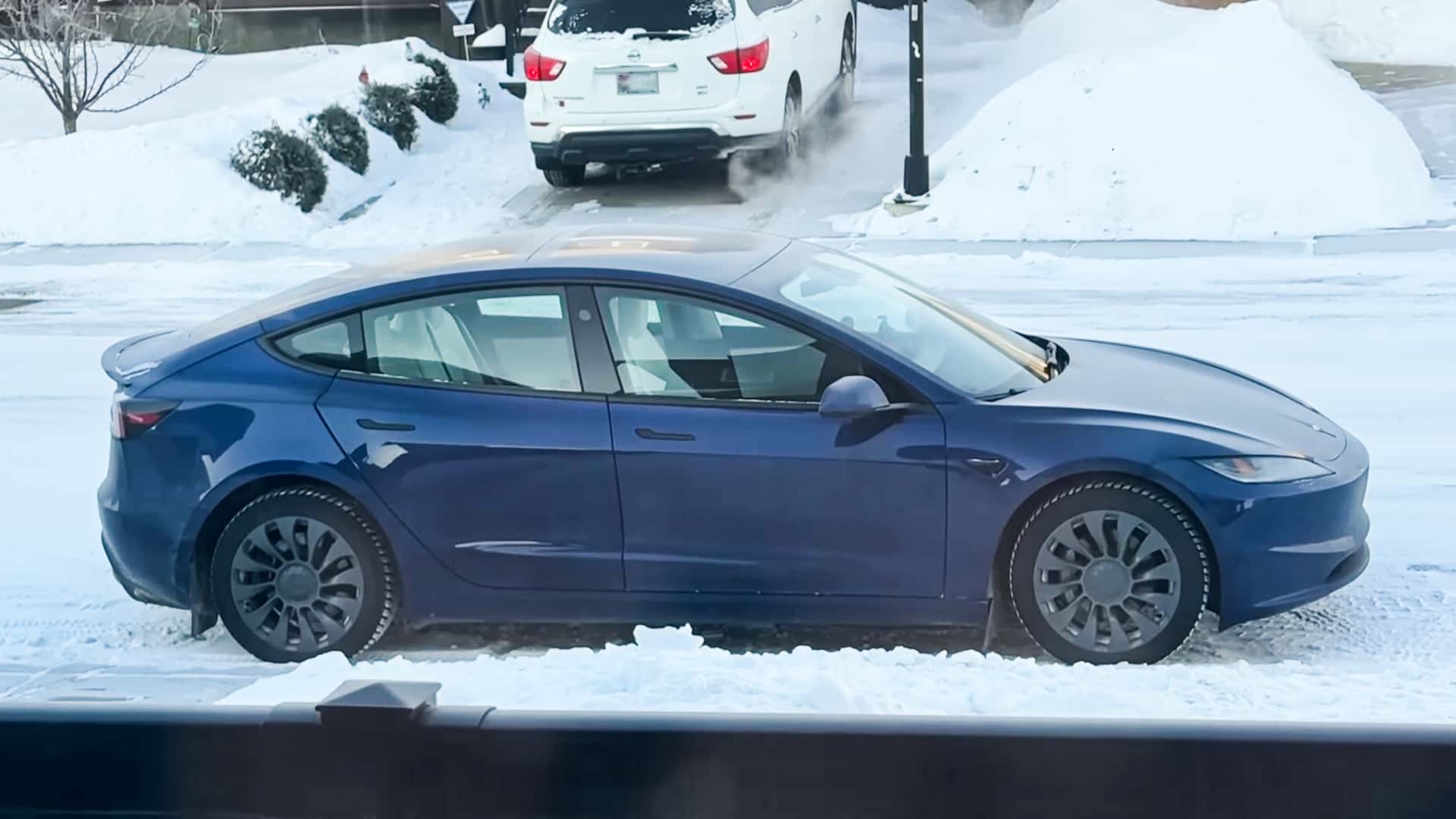
"Modern EVs can handle extreme temperatures just as well as any other type of car. In fact, electric cars have the upper hand simply because you can easily precondition the interior to make it warm or cold before you get insidewithout burning any fuel. Preconditioning makes a huge difference, especially when temperatures go as low as -33F (-36C). But one Tesla owner wanted to see what would happen if he just got in his Model 3 and drove to a DC fast charger after leaving the car outside overnight to freeze."
"YouTuber FrozenTesla parked his 2024 Tesla Model 3 Long Range All-Wheel Drive outside, unplugged, with a battery state of charge of 48%. He didn't open the smartphone app to wake up the car during the night, so the EV just sat for 10 hours soaking in the freezing cold. In the morning, the state of charge went down by 3%."
"At exactly 10:00, he got inside and started the EV. The high-voltage battery temperature, as reported by a third-party accessory, was -4F (-20C), while the ambient temperature was -26F (-32C). Everything worked fine, but there was an annoying sound coming from somewhere behind the wireless smartphone charging padit did go away after the car warmed up, though."
A 2024 Tesla Model 3 Long Range All-Wheel Drive sat outside overnight in extreme Canadian cold, unplugged and at 48% state of charge. The EV was not woken via the smartphone app and lost 3% state of charge after roughly 10 hours in subzero temperatures. On startup the high-voltage battery measured -4F (-20C) while ambient was -26F (-32C). The owner drove about 22 miles (34.4 km) to a Supercharger without selecting it as the destination, preventing battery preheating and producing poor energy efficiency and slow charging. An intermittent noise behind the wireless phone pad stopped after warming.
Read at insideevs.com
Unable to calculate read time
Collection
[
|
...
]