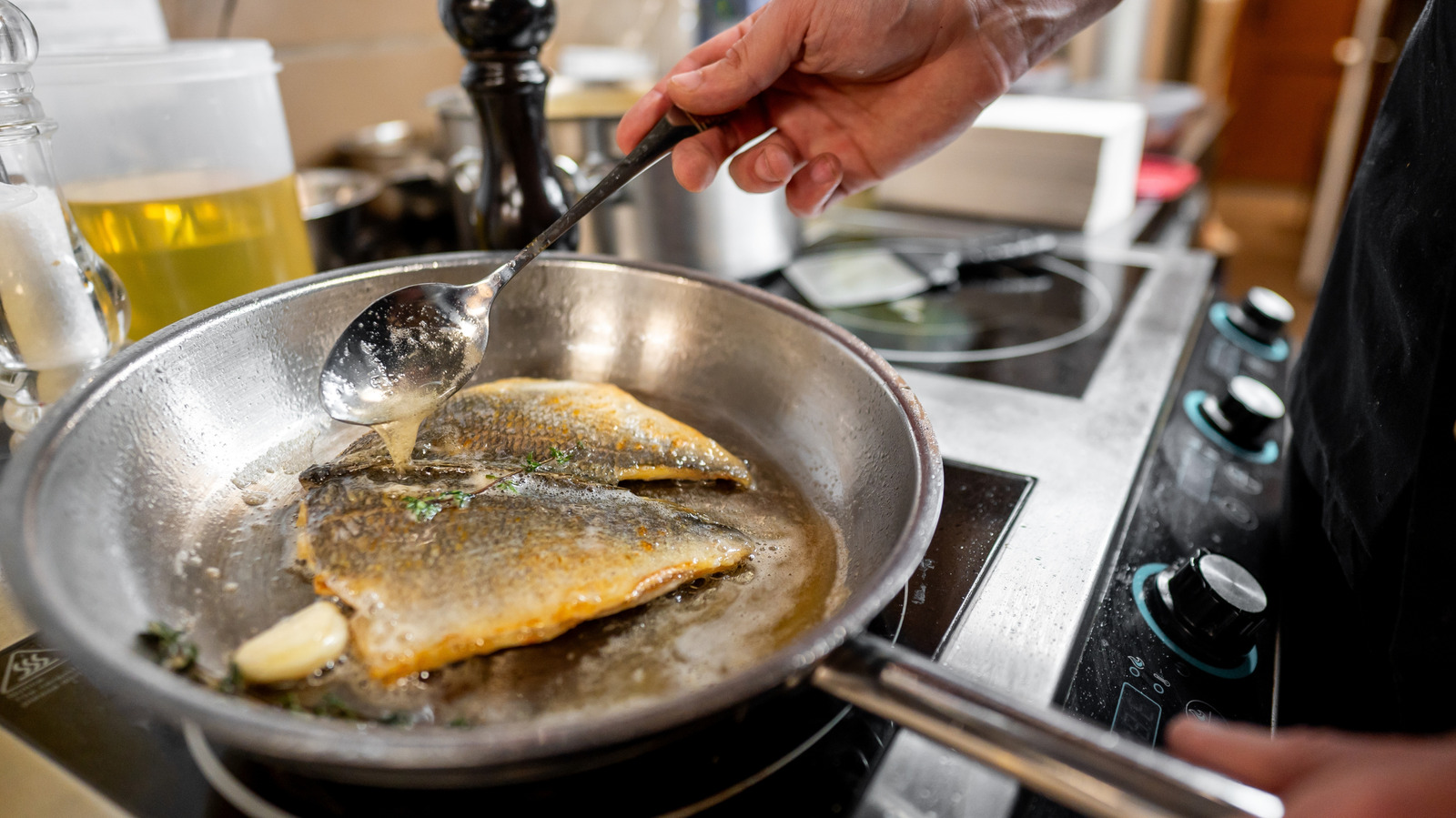
""Never fry super-delicate fish, as they fall apart," recommends Chef Becker. This means you should steer clear of frying fish like tilapia, branzino, sole, and flounder. When flipping them over, these fragile fish can easily break apart and overcook faster than you think. You'll either end up with breading that isn't crisp enough or an overly dry interior. Either way, it won't be an enjoyable meal."
"In addition to delicate varieties, Chef Becker warns against frying "super-oily fish like salmon, because it is overwhelmingly strong." Other oily fish like mackerel, sardines, and herring have a relatively high fat content in relation to their size and body mass, which can make them taste fishier. Frying these fish rich in omega-3 fatty acids can also make them taste heavy and greasy, not light and crispy as you expect from a typical fried fish."
"Now that you know which fish to avoid dunking into hot oil, it's good to know the best types of fish that hold up well to frying. We recommend going with cod, haddock, hake, pollock, and catfish. Generally, lean and mild-tasting fish work best for this cooking method and prevent them from breaking up during the cooking process. But it's not just about choosing the right fish. The right prep ensures you get that classic crispy and flaky crust and a soft interior, not a soggy and mushy mess."
Successful frying depends on temperature, oil, and fish selection. Super-delicate fish such as tilapia, branzino, sole, and flounder tend to fall apart when flipped and overcook, producing soggy breading or dry interiors. Super-oily fish such as salmon, mackerel, sardines, and herring can taste overwhelmingly fishy, heavy, and greasy when fried. Lean, mild-tasting species such as cod, haddock, hake, pollock, and catfish hold up well to frying and yield a crispy crust with a flaky, tender interior. Proper oil choice and maintaining hot, consistent oil temperature prevent sogginess and ensure quick, even cooking.
Read at Tasting Table
Unable to calculate read time
Collection
[
|
...
]