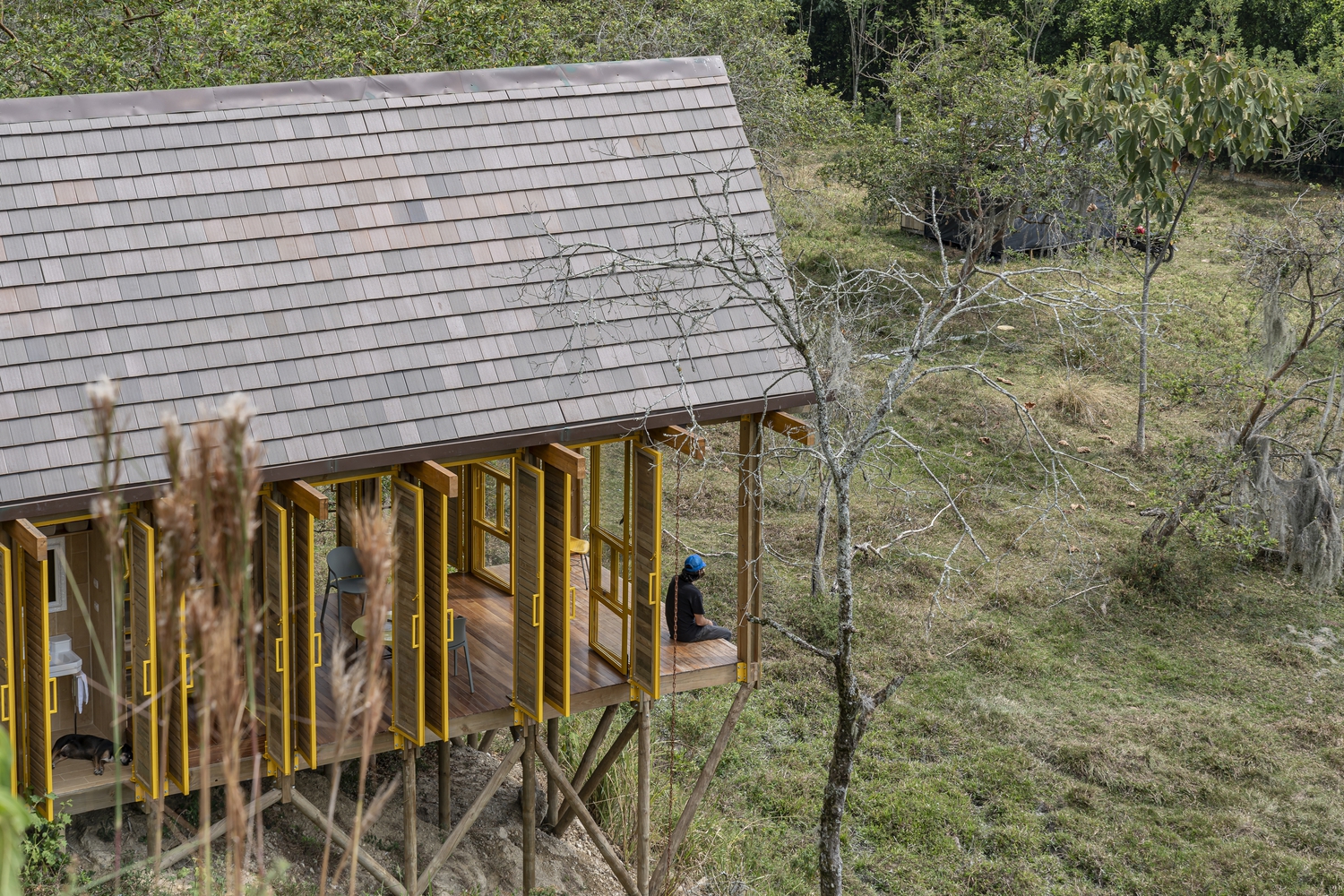
""Elevation allows architecture to adapt without fully taking over: water can pass below, vegetation can remain, and slopes can keep their original condition.""
""The project works as a small wooden room open to its surroundings, where the raised floor, roof, and light structure create a shaded place for pause and gathering.""
""Building directly on the ground would mean dealing with constant moisture, uneven terrain, and a fragile edge along the ravine.""
""This modest gesture shows how elevation can support both climate response and social life, reflecting a deep understanding of local conditions.""
In Latin America, architecture engages with diverse ecological conditions by elevating structures instead of leveling the ground. This approach allows for adaptation to water, humidity, and topography while preserving vegetation and natural landscapes. Projects like Tea Room in Babahoyo and Hoguera de Madera Refuge in Puyo exemplify this philosophy, using elevation to address environmental challenges and enhance social interaction. These designs reflect a deep understanding of local conditions and historical building practices, promoting ecological recovery and community engagement.
Read at ArchDaily
Unable to calculate read time
Collection
[
|
...
]