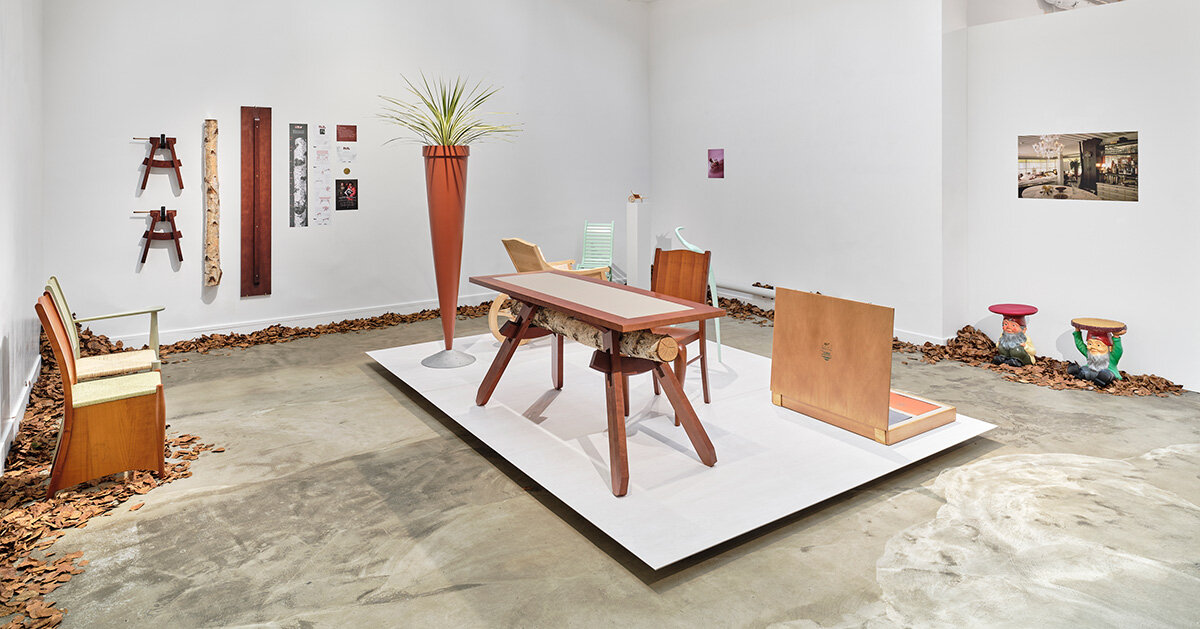
"At Ketabi Bourdet in Paris, 'The spirit of the forest' traces how Philippe Starck's relationship with nature moves from form and metaphor toward action and systems thinking. On view until February 28th, 2026, the exhibition reads as a slow reveal of an idea that keeps returning across decades, around design as a tool to reframe how we live with resources, memory, and the everyday."
"Often labeled 'eco-minded,' Starck integrated nature early on through visual and formal cues. Works like the W.W. stool and the Étrangeté vase translate vegetal strength and organic flows into objects, stepping away from the stark black metal furniture of the 1980s. At this stage, nature functions mainly as style, echoing the decorative logic of Art Nouveau a century earlier. Yet these pieces already signal a shift toward the common good and the messages Starck would embed more explicitly from the 1990s onward."
"That shift becomes tangible with Maison Starck in 1994, developed through the French industrial designer and architect's long collaboration with the mail-order catalogue 3 Suisses. For 4,900 francs and a 24-hour delivery, buyers received a box containing plans, a construction binder, a VHS presentation, a hammer, and a ceremonial flag. The offer granted the right to build a 140-square-meter wooden house, the maximum allowed in France without an architect, with construction costs rising to around one million francs, depending on options."
An exhibition at Ketabi Bourdet in Paris traces Philippe Starck's evolving relationship with nature, showing a progression from visual motifs to systems thinking and practical interventions. Early works such as the W.W. stool and the Étrangeté vase embody vegetal strength and organic flows, replacing 1980s black metal austerity with Art Nouveau echoes. The 1994 Maison Starck project offered a DIY wooden house kit via 3 Suisses, combining plans, a VHS presentation, tools, and a ceremonial flag to enable affordable, adaptable housing without an architect. The project reframed design toward the common good and practical alternatives for resource use, memory, and everyday living.
Read at designboom | architecture & design magazine
Unable to calculate read time
Collection
[
|
...
]