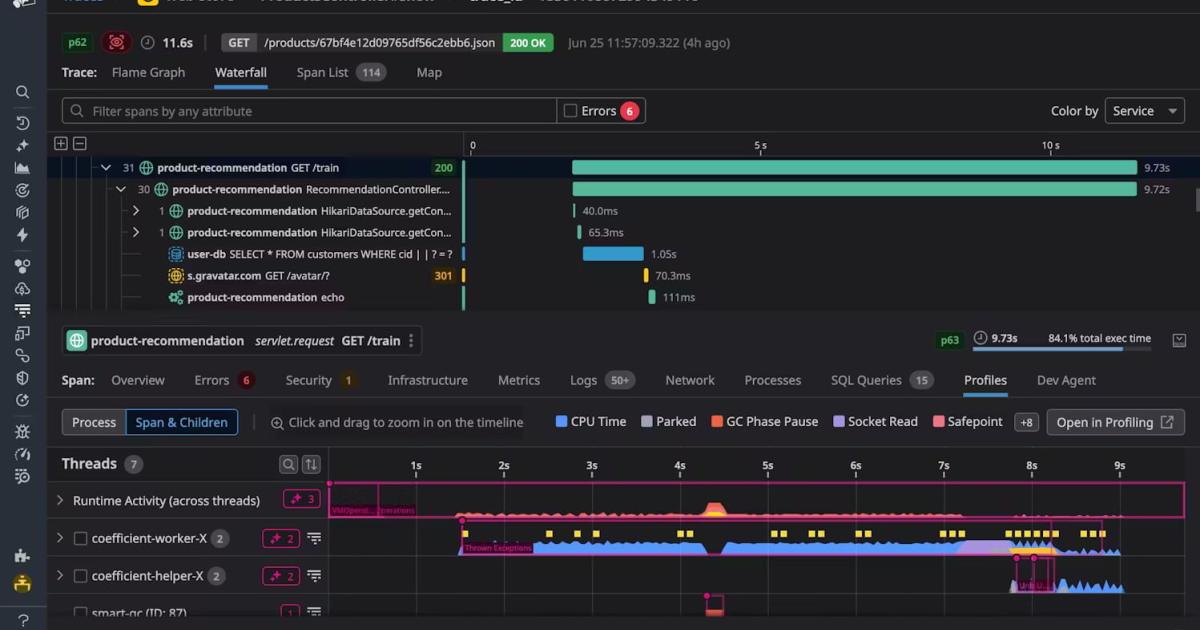
"When production breaks, every second spent jumping between dashboards and correlating disconnected data sources is a second your customers are waiting. This is why the real power of observability lies in bringing metrics, logs, and traces together so you can move from alert to root cause in minutes, not hours."
"Unified data beats more data. The value of observability tools comes from how quickly you can correlate metrics, logs, and traces to answer 'what's broken and why?' under pressure."
"Pricing and data strategy are connected. If pricing punishes you for sending data, teams will sample or drop telemetry-and you'll feel that during incidents."
"Implementation is as important as tool choice. Clear SLOs, consistent dashboards, and well-tuned alerts will do more for MTTR than yet another feature checkbox."
Effective incident response depends on consolidating observability data rather than accumulating more tools. When production issues occur, teams waste critical time correlating data across multiple dashboards and disconnected sources. The solution is unifying metrics, logs, and traces within a single platform to accelerate troubleshooting from hours to minutes. Key success factors include selecting platforms with broad integration capabilities to minimize custom code, aligning pricing models with data collection strategies to prevent sampling during incidents, and implementing clear SLOs with well-tuned alerts. Tool selection matters less than proper implementation and data correlation. Leading platforms like New Relic provide unified visibility through extensive integrations and AI-assisted analysis, enabling teams to investigate incidents across entire technology stacks efficiently.
Read at New Relic
Unable to calculate read time
Collection
[
|
...
]