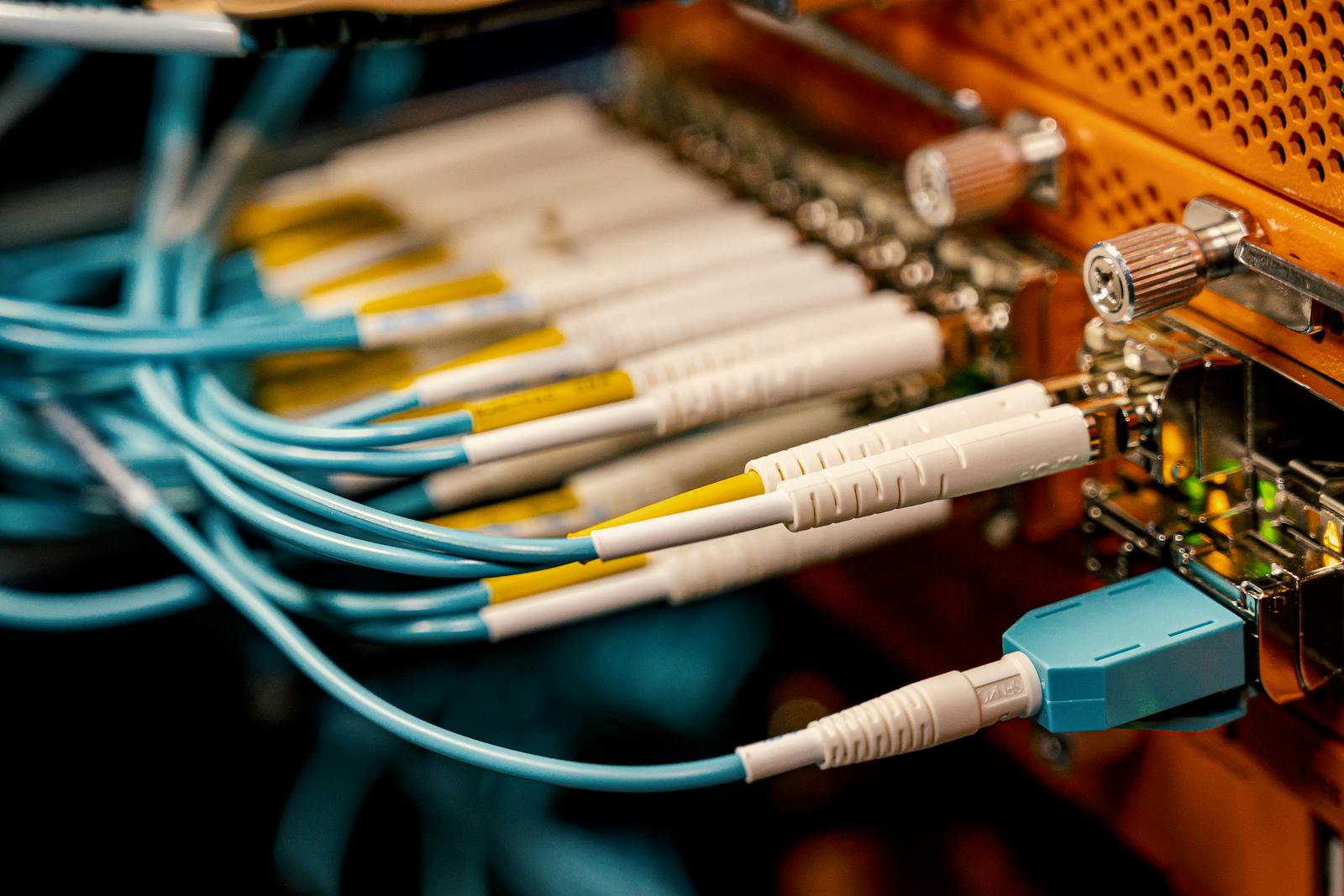
"Ninety-five percent of intercontinental internet traffic travels through undersea fiber optic cables. Not satellites, not some ethereal "cloud" floating above us. Cables. Physical, tangible lines of glass fiber, thinner than a garden hose, laid across ocean floors by specialized ships. There are roughly 550 active or planned cable systems worldwide, according to TeleGeography's Submarine Cable Map, and they represent the actual, material backbone of the global internet."
"I spent several months tracing ownership structures, consortium agreements, and landing rights for the major cable systems connecting continents. What emerged was a map that tracks, with eerie precision, onto the geography of colonial extraction. The cables land in the same ports, follow the same routes, and serve the same directional logic as the telegraph lines and trade routes of the 19th century British, French, and Portuguese empires."
"Consider Africa. The continent of 1.4 billion people is connected to the global internet primarily through cables that run along its coasts, landing at a handful of port cities that were, in almost every case, colonial trading posts. Djibouti, Mombasa, Lagos, Dakar, Cape Town. These were the nodes of resource extraction for European empires. Today they are the nodes of data transit."
Undersea fiber optic cables form the physical backbone of global internet infrastructure, with approximately 550 active or planned cable systems worldwide. These cables, thinner than garden hoses, are laid across ocean floors by specialized ships and carry 95% of intercontinental data traffic. An investigation into cable ownership reveals a striking pattern: the geographic distribution of these cables mirrors 19th-century colonial trade routes and extraction networks. African connectivity, for example, concentrates at historical colonial port cities like Djibouti, Mombasa, Lagos, Dakar, and Cape Town. This topology demonstrates how digital infrastructure perpetuates historical power structures and geographic inequalities established during imperial periods.
#undersea-cable-infrastructure #colonial-geography-and-digital-power #internet-ownership-and-control #global-data-networks #infrastructure-inequality
Read at Silicon Canals
Unable to calculate read time
Collection
[
|
...
]