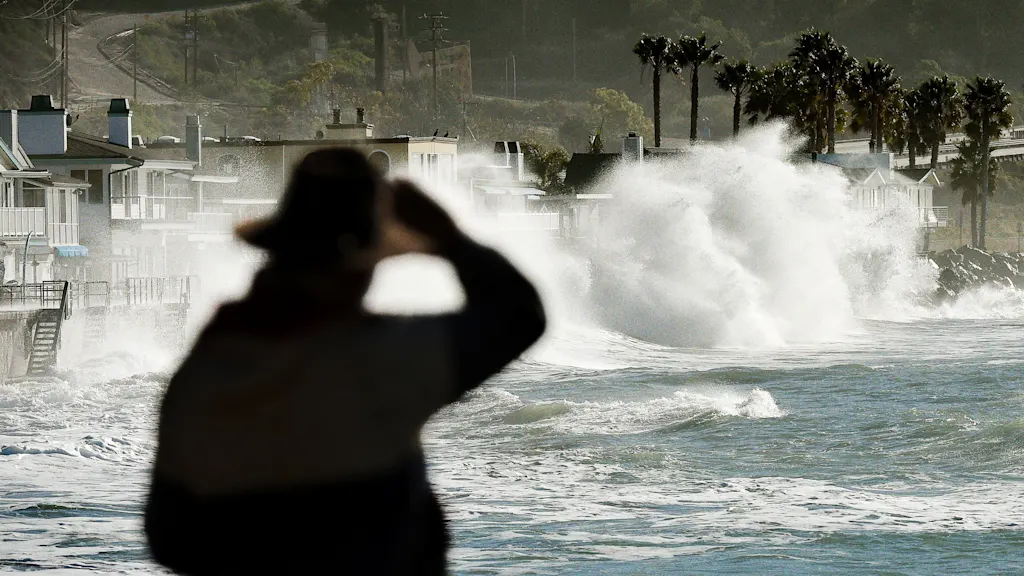
"El Niño is "likely to emerge soon" with an 82% chance of it starting as early as this month into July, and with a 96% chance it will continue from December into February 2027, according to The National Oceanic and Atmospheric Administration's (NOAA) Climate Prediction Center."
"The report, out Thursday, says while there is "still substantial uncertainty about El Niño's peak strength" this hurricane season-and it's too early to tell-the summer outlook does seem ripe for the possibility of creating " very strong " conditions later, as "the strongest El Niño events in the historical record are characterized by significant ocean-atmosphere coupling through the summer.""
"El Niño is a complex weather pattern that refers to the warming of the ocean surface, or above-average sea surface temperatures, in the Pacific Ocean. Winds that normally blow west to east weaken, and in some cases blow east, disrupting normal weather and creating more extreme meteorological events, per the U.S. Geological Survey (USGS). As the winds " take warm water from South America towards Asia," that's replaced by cold water that rises up, or "upwelling," according to NOAA."
"The impact can be global, and not only intensify storms and flooding, particularly in the U.S. Southeast and Gulf Coast, but also create wildfires and drought. The 2015 Super El Niño caused a significant Caribbean drought. El Niño typically lasts nine to 12 months, and occurs an average of every two to seven years."
El Niño is likely to emerge soon, with an 82% chance of starting as early as this month through July and a 96% chance of continuing from December into February 2027. Substantial uncertainty remains about peak strength, and it is too early to determine hurricane-season impacts. Summer conditions may support the possibility of very strong El Niño later because the strongest events show significant ocean-atmosphere coupling through summer. 2026 is already trending among the warmest on record, with April ranking fourth-warmest since 1850. El Niño involves warming of Pacific Ocean surface waters, weakening or reversing typical west-to-east winds, and replacing warm water transport with upwelling of cold water. Impacts can be global, including more extreme weather, drought, wildfires, and flooding, with the 2015 Super El Niño linked to Caribbean drought.
Read at Fast Company
Unable to calculate read time
Collection
[
|
...
]