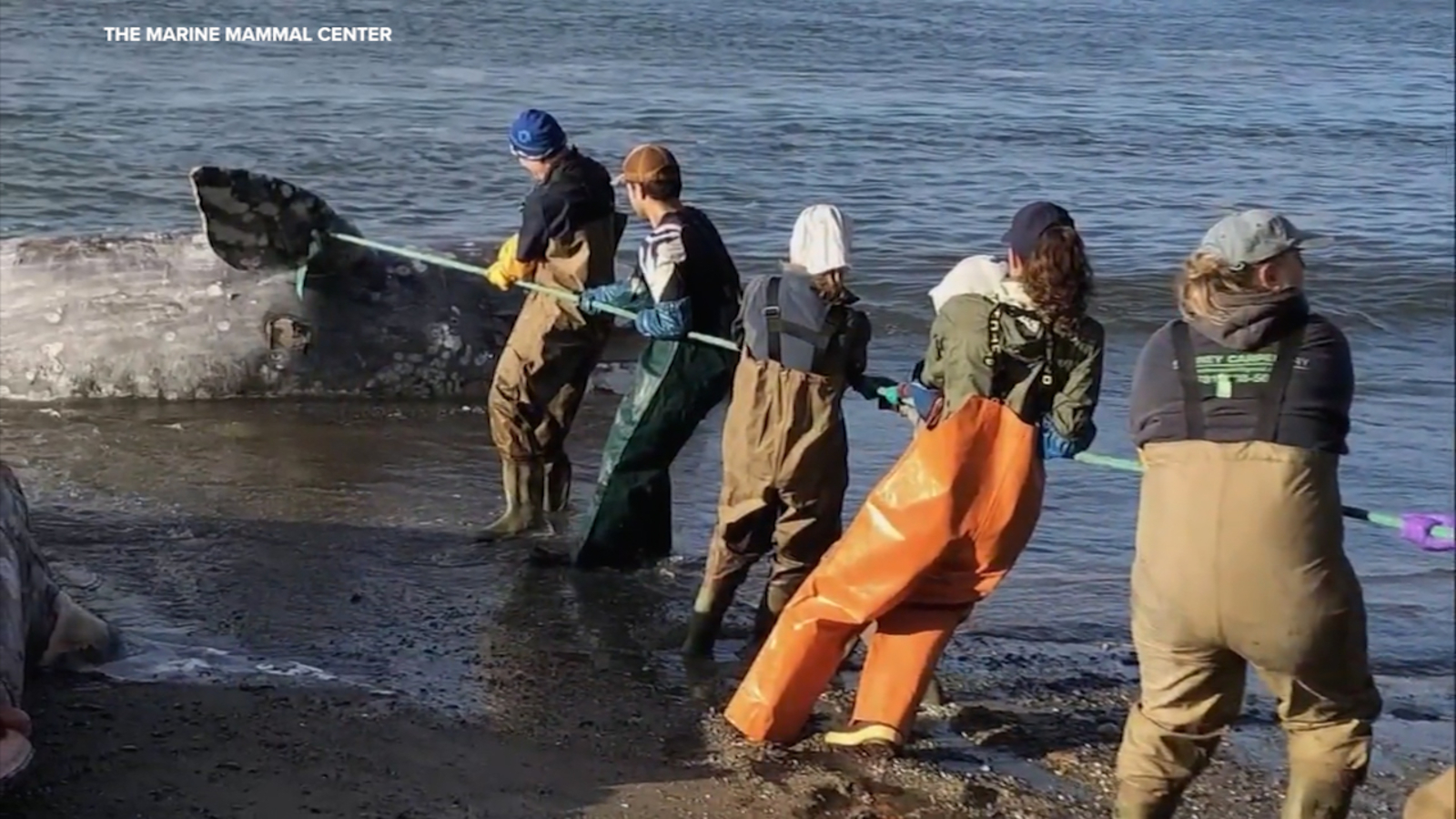
"“It's a complex story, but ultimately it comes down to one point, and that's climate change. The actual way by which climate change is affecting gray whales is complex and only partially understood, but we know it is the effects of climate change in the Arctic that's affecting these gray whales here off our coast,” Savoca said."
"“First, it helps to understand that we're just one stop on one of the longest migrations of any whale species, essentially from the Arctic to Mexico and back. And like any vacation road trip, you want to load up on fuel first. But researchers believe melting ice sheets in the Arctic could be disrupting the normal food chain down to the seafloor, where grays typically feed.”"
"“If that's the case, and that's just a theory, that's just a hypothesis. But if that's the case, then even though there might be more places in the Arctic that gray whales can forage, perhaps those places are not as good to forage as we initially thought they might be,” he said."
Gray whale sightings and deaths have increased around San Francisco Bay, prompting researchers to investigate causes across long distances. The events are used to understand changes in the marine environment, including impacts from climate change. Gray whales migrate from the Arctic to Mexico and back, relying on productive feeding along the route. Researchers say melting Arctic ice can disrupt the normal food chain down to seafloor feeding areas. Even if more Arctic locations become available for foraging, those areas may provide lower-quality food. The situation is considered complex and only partially understood, requiring environmental detective work on a global scale.
Read at ABC7 San Francisco
Unable to calculate read time
Collection
[
|
...
]