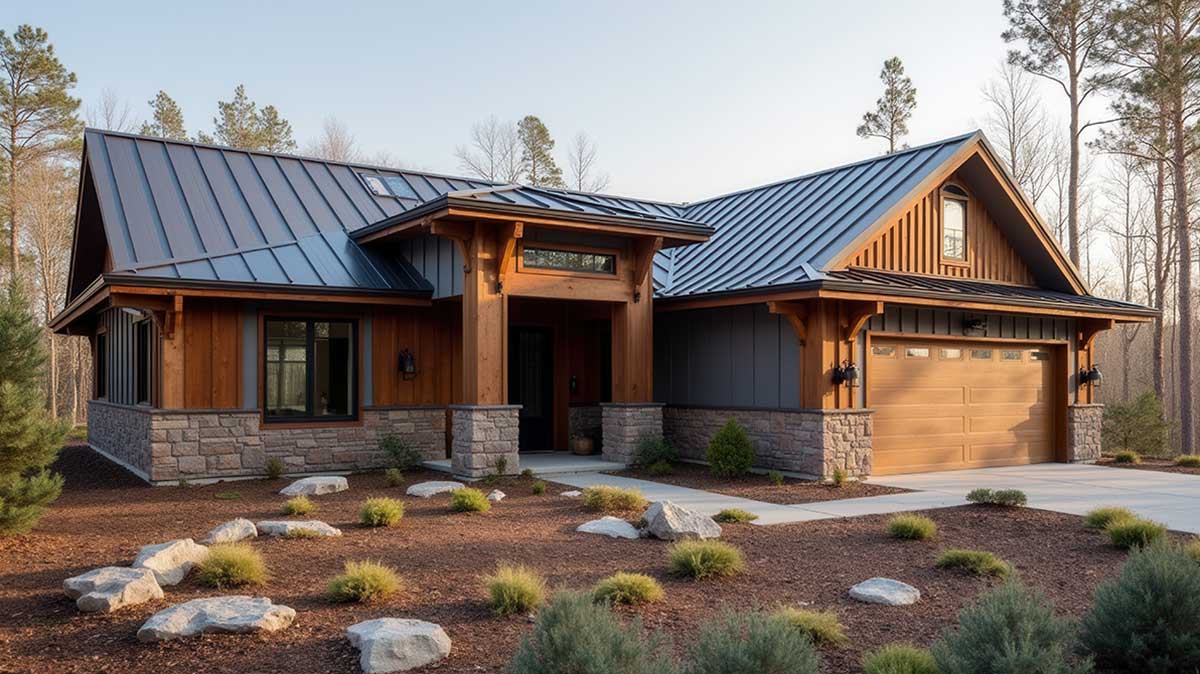
Two wildfire-damaged homes show how nearby ground cover affects ignition. One house burned down after flammable bark mulch under windows and tall, dry grasses touched siding. The other house stayed standing because low-growing succulents near the foundation and a five-foot perimeter of gravel and concrete pavers reduced available fuel. Extreme weather is increasing wildfire risk earlier than expected, with record heat melting snowpack and enabling an early, likely severe season. Research indicates that survivability is less about the wildfire itself and more about conditions within the first five feet around a home. Landscaping choices in that zone can disrupt ignition by limiting fuel beds and reducing pathways for embers and heat transfer.
"Picture two houses in the aftermath of a California wildfire. What's left of one is a scorched foundation on a blackened lot. The fire spread quickly, partly due to a bed of flammable bark mulch under the windows and tall, dry ornamental grasses touching the siding. The other home is an island in a sea of gray ash. It remained intact, thanks to its protective landscape of low-growing succulents near the foundation and a 5-foot perimeter of gravel and concrete pavers."
"Extreme weather events are setting the stage for fires in periods experts once considered safe. A record-breaking heat wave raised temperatures to 106° Fahrenheit in mid-March and melted the area's snowpack, paving the way for an early and likely severe wildfire season. The time to prepare is now, not in the "traditional" summer months."
"Research from the Insurance Institute for Business and Home Safety (IBHS) shows that the survivability of a house is less about the wildfire itself and more about the first 5 feet around it. Learn how the landscaping choices within this zone can either protect or endanger your home, as well as recommendations for your region."
"The first pathway is ember ignition. Fire starts with embers, which are small burning pieces of wood, bark and other vegetation. The wind can carry and shower them down on homes far from the main fire front. They smolder when they land on a receptive "fuel bed," which could be anything from a pile of dry leaves in a gutter to the dense, dead material inside a bush. Then, a small flame erupts, which can then spread to nearby surfaces and structures."
#wildfire-preparedness #defensible-space #fire-resistant-landscaping #ember-ignition #extreme-weather
Read at Earth911
Unable to calculate read time
Collection
[
|
...
]