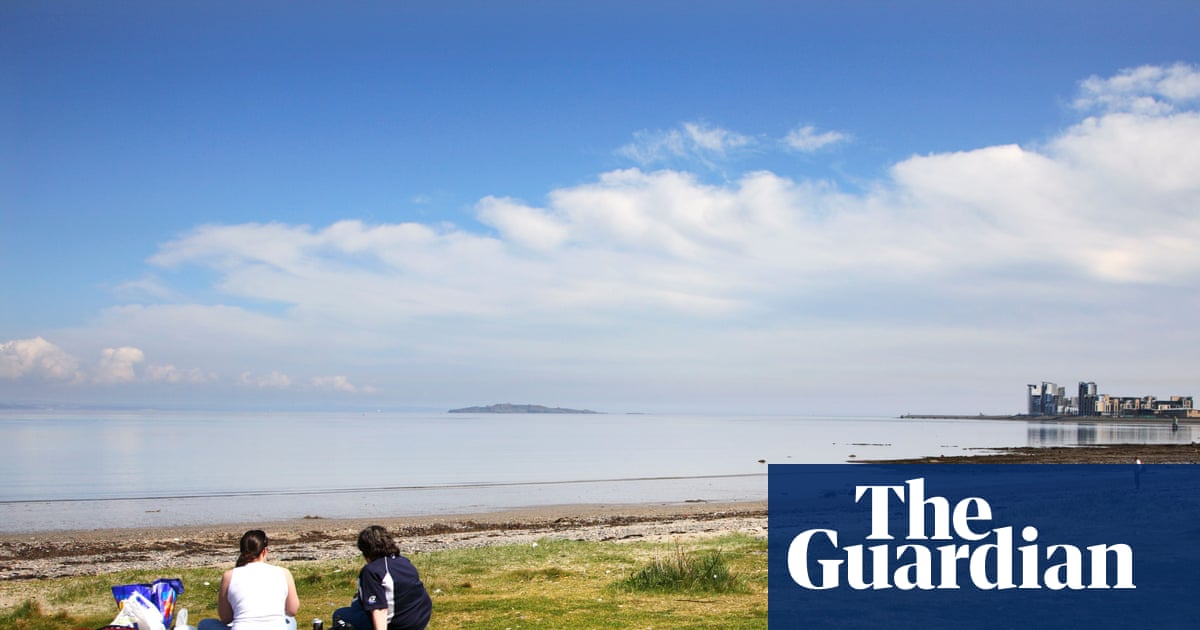
"As much as half of some British beaches' coarse sediments consist of human-made materials such as brick, concrete, glass and industrial waste, a study has found. Climate breakdown, which has caused more frequent and destructive coastal storms, has led to an increase in these substances on beaches. Six sites on the Firth of Forth, an estuary on Scotland's east coast joining the River Forth to the North Sea, were surveyed to better understand the makeup of urban beaches."
"The researchers used a systematic search method to collect and analyse sediment from beaches at Torryburn, Ravenscraig, the Fife coastal path, Carriden, Granton and Prestonpans. On Granton beach near Edinburgh, researchers from the University of Glasgow found evidence that up to half of the beach's coarse sediments were from human-made materials. These sediments mostly derive from matter swept from land into the Forth by the erosion of coastal industrial sites and the dumping of waste."
"This phenomenon is not unique to Scotland. On Crosby beach in Merseyside, waste from collieries and the blitz in the second world war now forms a large part of what is called sand. The Thames estuary's sediments are also thought to be made up of a significant amount of human-made materials. On a sandy bank opposite Canary Wharf, littered bricks that have rounded over time are referred to as Thames potatoes."
Up to half of the coarse sediments on some British urban beaches consist of human-made materials including brick, concrete, glass and industrial waste. Climate breakdown and more frequent destructive coastal storms have increased the delivery and presence of these substances on shorelines. Surveys of six Firth of Forth sites found an average of about 22% human-made coarse sediment, with some sites reaching roughly 50%. Much of the material derives from erosion of coastal industrial sites and dumped waste swept into estuaries. Comparable patterns occur at Crosby beach and in the Thames estuary, where rounded bricks are known as "Thames potatoes." Calls have been made for further research to inform coastal management.
Read at www.theguardian.com
Unable to calculate read time
Collection
[
|
...
]