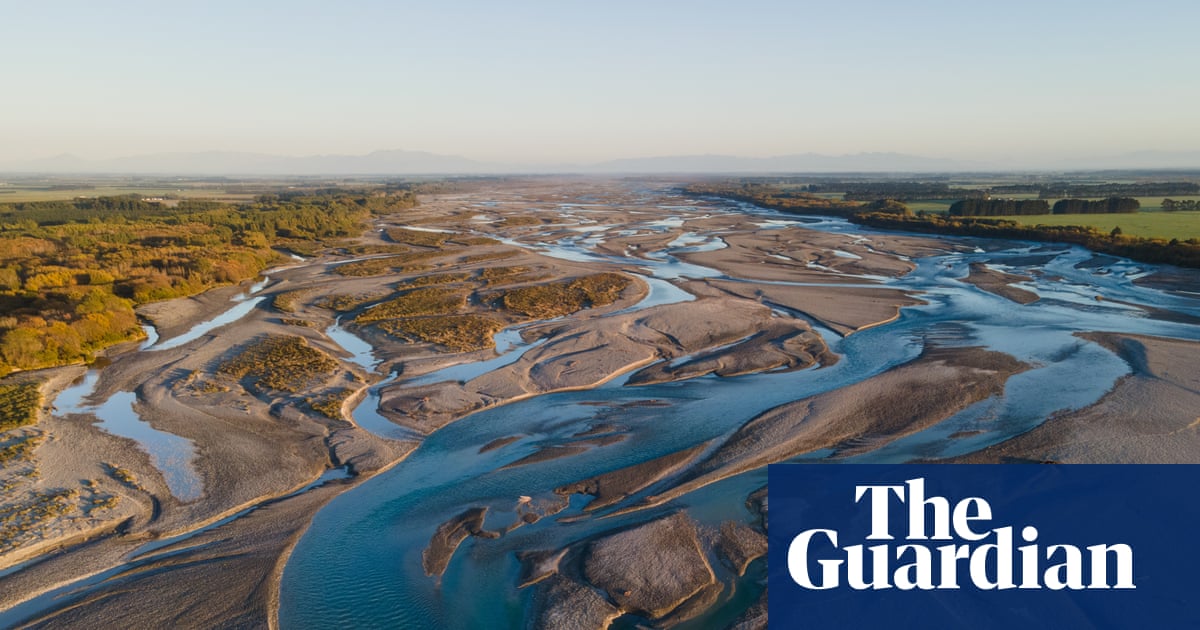
"People say you shouldn't be interfering with the river; the outcome if we don't is worse. It has been intervened in so much at this point, you have to keep intervening. Fred Brooks, a river engineer with the local regional council, Environment Canterbury, explains the paradox of managing the Waimakariri River, highlighting how past interventions have created dependency on continued management."
"By the 1920s, the Waimakariri was described as a flood menace in a report to authorities, one that showed a deficiency of nature, which must be made good by the art of man. With that, the river was brought into submission, slowly hemmed in with stopbanks, exotic tree planting and gravel extraction, establishing a pattern of control that continues today."
"The Waimakariri is one of about 150 braided rivers across New Zealand, 60% of which are concentrated in the South Island's Canterbury region. The unique river systems are found in just a handful of other places around the world, including Alaska, Canada and the Himalayas, making them globally significant ecosystems."
New Zealand's braided rivers, particularly the Waimakariri near Christchurch, represent globally rare river systems found in only a few locations worldwide. Early British settlers largely ignored these rivers, but as flooding and environmental changes threatened development, authorities began extensive interventions including stopbanks, exotic tree planting, and gravel extraction. These modifications have created a dependency on continuous maintenance to prevent flooding and protect infrastructure. The 150 braided rivers in New Zealand, with 60% concentrated in Canterbury, now face significant challenges from human interference. While interventions were necessary to enable community development and farming, they have disrupted ecosystems, damaged species habitats, degraded water quality, and paradoxically increased flood risks. Growing concerns about the future resilience of these unique river systems prompt questions about sustainable coexistence.
Read at www.theguardian.com
Unable to calculate read time
Collection
[
|
...
]