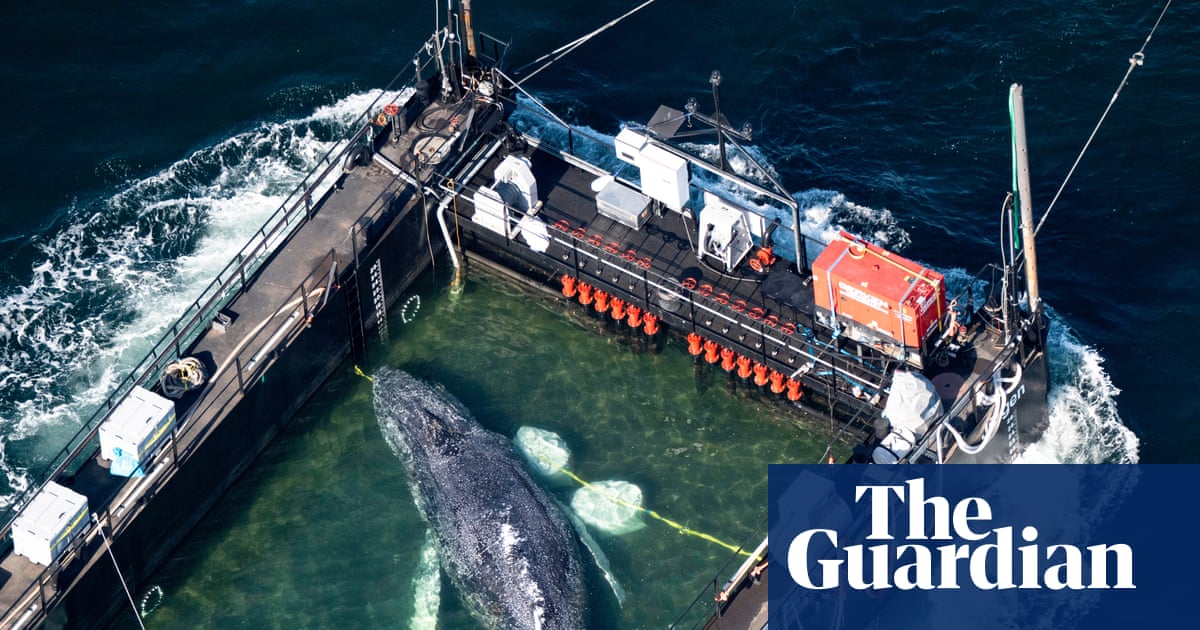
"Last week, a privately funded rescue mission believed to have cost about 1.5m (1.3m) helped float Timmy away from the sandbanks. The photos of the whale in the barge are extraordinary an apparent moment of hope that the creature would be saved. But the effort has ended in farce. The tracker, meant to monitor Timmy's progress back into deeper waters, is not working. The animal is presumed dead, an outcome that many conservationist and scientists warned about before the private initiative, with one describing the operation as an all-round catastrophe."
"Timmy was already weak after repeated strandings, and had spent weeks in water with low salinity. Many experts said it would be cruel to prolong his life and some even suggested euthanasia would be the most humane outcome. Amy Dickham, a professor of wildlife conservation at the University of Oxford, says there are many lessons to reflect on from the case. It's really striking that there's been such a focus on this individual animal at such great cost during a time of great crisis for wildlife funding around the world."
"In normal circumstances, the loss of a young humpback whale would be a sad yet unremarkable part of the circle of life. Dead whales help sustain thousands of marine species and are part of the global carbon cycle. But in the age of social media, the case took on a different meaning: millions of people saw videos and images of the juvenile male hovering between life and death, and many demanded that something was done to help the animal."
"What does the case of Timmy the whale say about the complex work of conservation? More, after this week's climate headlines. Essential reads In focus Fans of Eintracht Frankfurt display a banner dedicated to Timmy the humpback whale. Photograph: Alex Grimm/Getty Images"
A juvenile humpback whale nicknamed Timmy was repeatedly stranded on the Baltic coast and became widely seen online as it hovered between life and death. A privately funded rescue mission was launched to float the whale away from sandbanks, costing about 1.5m. Photos showed the whale on a barge, creating a moment of hope. The mission ended in failure because a tracker meant to monitor progress back into deeper waters did not work. The whale was presumed dead, despite warnings from conservationists and scientists that the outcome was likely. Experts also criticized the focus on one individual animal at high cost during a period of major wildlife funding crises, questioning whether the effort was a good use of resources.
Read at www.theguardian.com
Unable to calculate read time
Collection
[
|
...
]