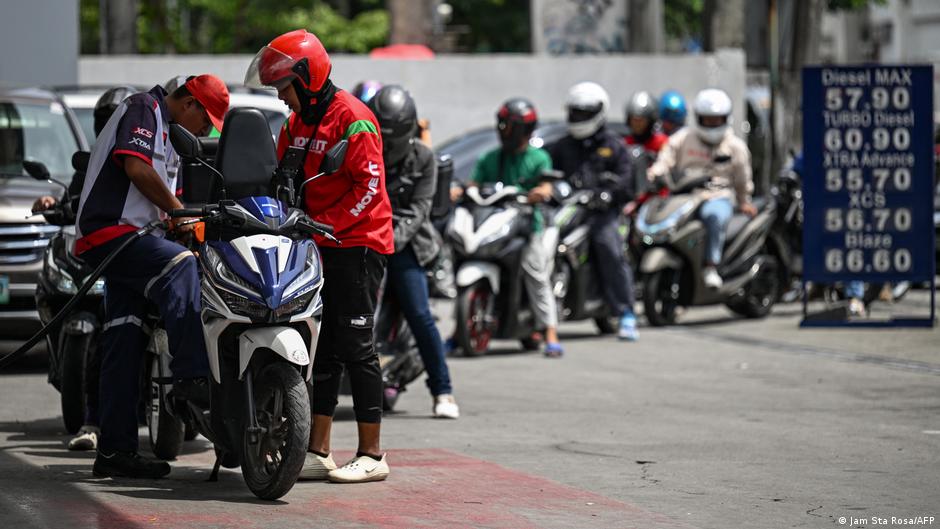
"Faced with a severe energy crisis that could upend their economies and trigger street protests, some Southeast Asian governments will prioritize oil supplies over what they perceive as a faraway conflict in which they don't have a direct stake. Ian Storey, senior fellow at the ISEAS-Yusof Ishak Institute in Singapore, told DW."
"Russia remains one of the top energy suppliers on the global stage. It is the world's second-biggest oil exporter, behind Saudi Arabia, and the second-biggest gas exporter, trailing only the US. Crucially, Russia's geography allows it to export its energy without passing through the Strait of Hormuz, which has been disrupted by the US-Israel war against Iran."
"The region consumes around 5 million barrels of oil per day but produces only about 2 million, forcing it to buy the rest on the global energy market. Most of its oil imports come from the Middle East."
Southeast Asian governments face an unprecedented energy crisis while the EU pressures them to avoid purchasing Russian energy. Russia remains a major global energy supplier as the world's second-largest oil and gas exporter, with geographic advantages allowing energy exports without passing through the Strait of Hormuz. EU foreign policy chief Kaja Kallas warned ASEAN nations that increased Russian oil purchases would fund Moscow's Ukraine war. However, Southeast Asian capitals prioritize fuel security and food production over diplomatic concerns about a distant conflict. The region consumes approximately 5 million barrels of oil daily but produces only 2 million, requiring substantial imports primarily from the Middle East. Facing severe energy crises threatening economic disruption and social unrest, some Southeast Asian governments will likely prioritize oil supplies over geopolitical considerations.
Read at www.dw.com
Unable to calculate read time
Collection
[
|
...
]