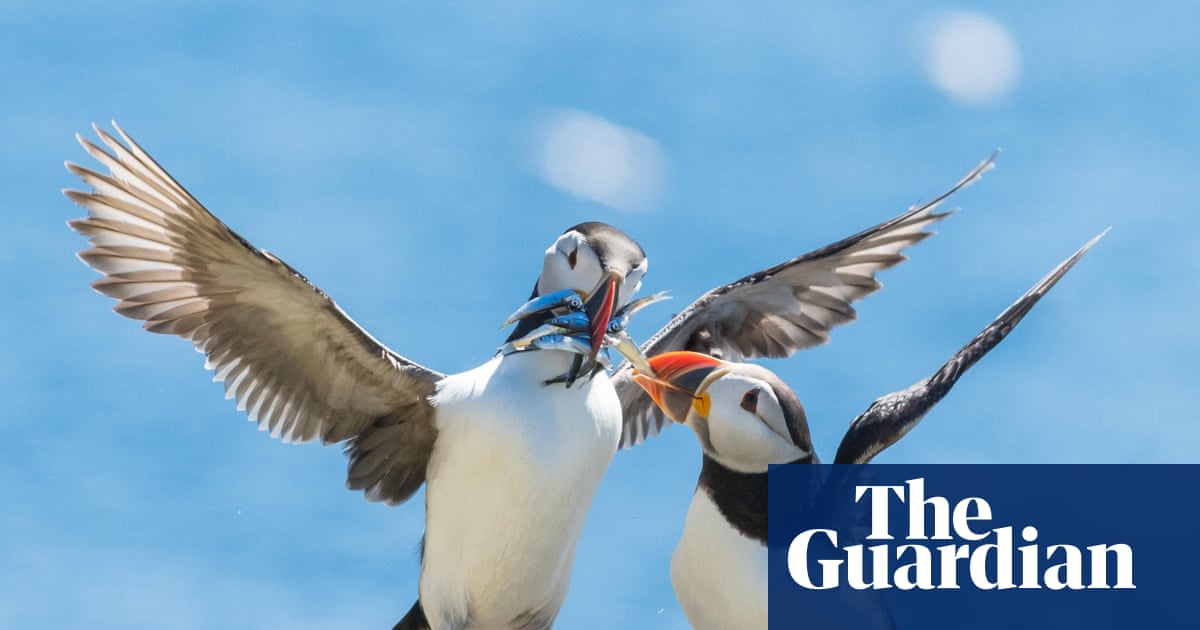
"Thousands of seabirds mostly puffins, but also many guillemots and razorbills are being washed up dead or dying on the Atlantic coasts of western Europe, in what scientists call a wreck. This year's events, the consequence of a series of severe storms during the late autumn and winter, are the worst since 2014, when as many as 54,000 birds were found stranded."
"This may only be the tip of a very large iceberg, as puffins usually spend the winter far out in the north Atlantic, meaning many more birds will have died at sea and their corpses will never reach the shore. The RSPB has warned that this recent series of weather-related disasters comes on top of a very tough few years for puffins."
"Avian flu and a decline of their favourite food sand eels have reduced breeding success at their colonies on offshore islands and around our coasts. They, and Britain's other seabirds, such as gannets, fulmars and kittiwakes, also face problems from a rise in marine pollution. The increase in the frequency and severity of winter storms is a direct result of the global climate crisis."
Severe autumn and winter storms have caused a major seabird wreck along western European Atlantic coasts, with thousands of puffins, guillemots, and razorbills found dead or dying. This year's event ranks among the worst since 2014, when approximately 54,000 birds stranded, including 30,000-34,000 puffins. The actual death toll likely far exceeds visible casualties, as puffins winter in remote north Atlantic waters where bodies remain unrecovered. Puffin populations face compounding pressures including avian flu outbreaks, declining sand eel populations reducing breeding success, and increased marine pollution. Rising storm frequency and severity directly result from climate change, threatening all seabird species and causing widespread British flooding.
Read at www.theguardian.com
Unable to calculate read time
Collection
[
|
...
]