"After ten years in the lead, Malta has been overtaken by Spain at the top of ILGA Europe's annual Rainbow Map. The ranking, compiled by the International Lesbian, Gay, Bisexual, Trans and Intersex Association (ILGA), compares laws and policies affecting LGBTQ+ people in 49 countries across Europe and Central Asia. Katrin Hugendubel, Deputy Director of ILGA Europe, told DW Spain's rise shows what is possible when governments make a deliberate choice to advance equality rather than retreat from it."
"Spain's rise reflects a series of measures taken under the left wing government of Spanish Prime Minister Pedro Sanchez. These include new equality laws, national action plans, an independent equal treatment authority and the depathologization of trans identities in healthcare. According to Hugendubel, this progress is particularly significant because it happened despite pressure from far right and conservative forces. The Spanish government, she said, has continued to defend its reforms against attempts to roll them back."
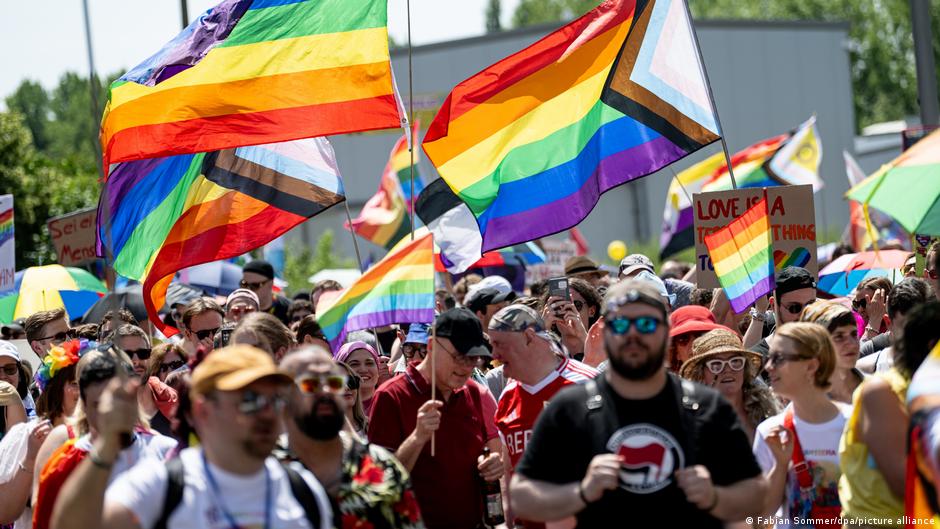
"ILGA Europe's map shows these countries have strong legal protections for LGBTQ+ people. There has also been progress further down the ranking. Czechia and Sweden, for example, made it easier for people to legally change their gender. Participants of the Pride in Erfurt, Germany, demonstrate for queer rights. While large demonstrations are still common across Western European nations, analysts warn there has been regression in recognizing the rights of LGBTQ+ communities."
"At the bottom of the list are Armenia, Belarus, Turkey, Azerbaijan and Russia. Romania remains the lowest ranked EU country, in 42nd place out of 49. Countries at the bottom score poorly for different reasons. Turkey continues to ban Pride events and uses its penal code to put queer activists un"
Spain moved to first place after a decade in which Malta led. The ILGA Europe Rainbow Map ranks laws and policies affecting LGBTQ+ people across 49 countries in Europe and Central Asia. Spain’s rise is linked to equality laws, national action plans, an independent equal treatment authority, and depathologization of trans identities in healthcare. Progress occurred despite pressure from far-right and conservative forces, and reforms were defended against attempts to roll them back. Malta, Iceland, Belgium, and Denmark follow Spain, reflecting strong legal protections. Some countries improved gender recognition procedures, while others showed regression. Armenia, Belarus, Turkey, Azerbaijan, and Russia rank at the bottom, with Turkey banning Pride events and using penal code provisions against queer activists.
Read at www.dw.com
Unable to calculate read time
Collection
[
|
...
]