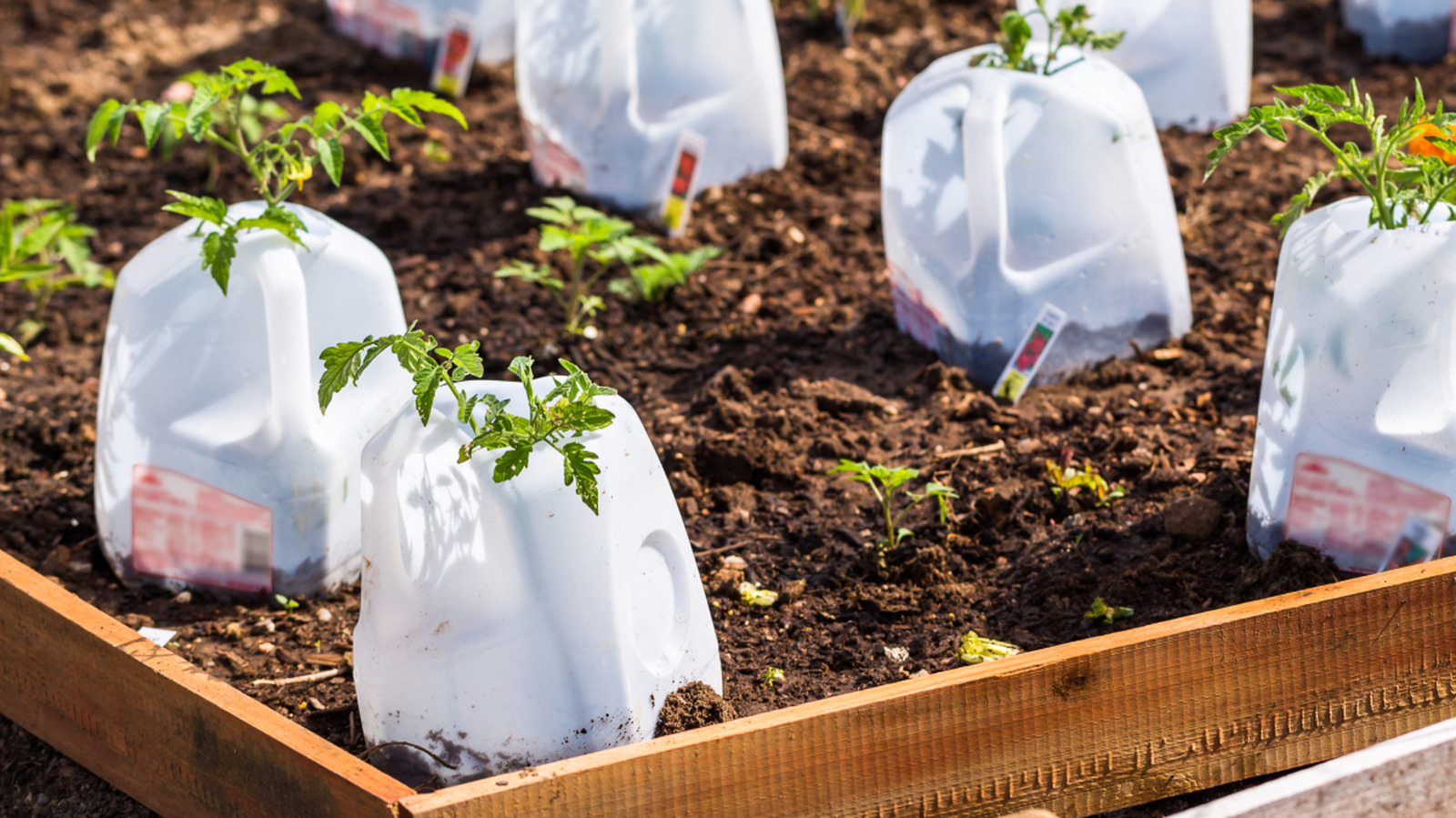
"Big plastic beverage and food containers can be repurposed in a number of ways, and an easy one is in the garden. When you visit a garden shop, you'll notice two tiers of planters: the ones made of ceramic, terracotta and metal, and then the rest of the more affordable options, which are all made of the same material as the milk jugs: plastic."
"They're lightweight and waterproof, and easy to cut through and amend to whatever shape you need. They often have a built-in handle, which makes them easy to move around. The size is also perfect for small plants like herbs and starter seedlings, and any plant whose roots don't mind a shallower soil. If you're a houseplant person, they can be perfect for giving away all the rooted cuttings that inevitably accumulate."
"That being said, it's literally meant to be disposable, so inherently, plastic has limits. Most milk jugs are made from high-density polyethylene, which holds up well in the short term, but will start to degrade with prolonged exposure to the sun and weather. Over time, that breakdown will contribute microplastics to the soil the jugs are holding. They're good for a single growing season, or short-term planting needs, like for seed starts."
"The process is fairly easy, and doesn't require a lot of expertise or precision. Start by rinsing the jug thoroughly, then cut the top off below the narrow neck. How far down you make that cut wi"
Large plastic food and beverage containers can be reused in gardens instead of being discarded. Plastic planters are often made from the same material as milk jugs, and milk jugs work well because they are lightweight, waterproof, and easy to cut into different shapes. Many jugs include built-in handles for moving plants. Their size suits small plants such as herbs and starter seedlings, and they can also hold rooted cuttings for sharing. Limited outdoor space can be covered by using multiple containers. Plastic is inherently disposable, and high-density polyethylene can degrade with sun and weather, contributing microplastics to soil. They are best for one growing season or short-term planting needs. The reuse process starts with rinsing the jug and cutting off the top below the narrow neck.
Read at Tasting Table
Unable to calculate read time
Collection
[
|
...
]