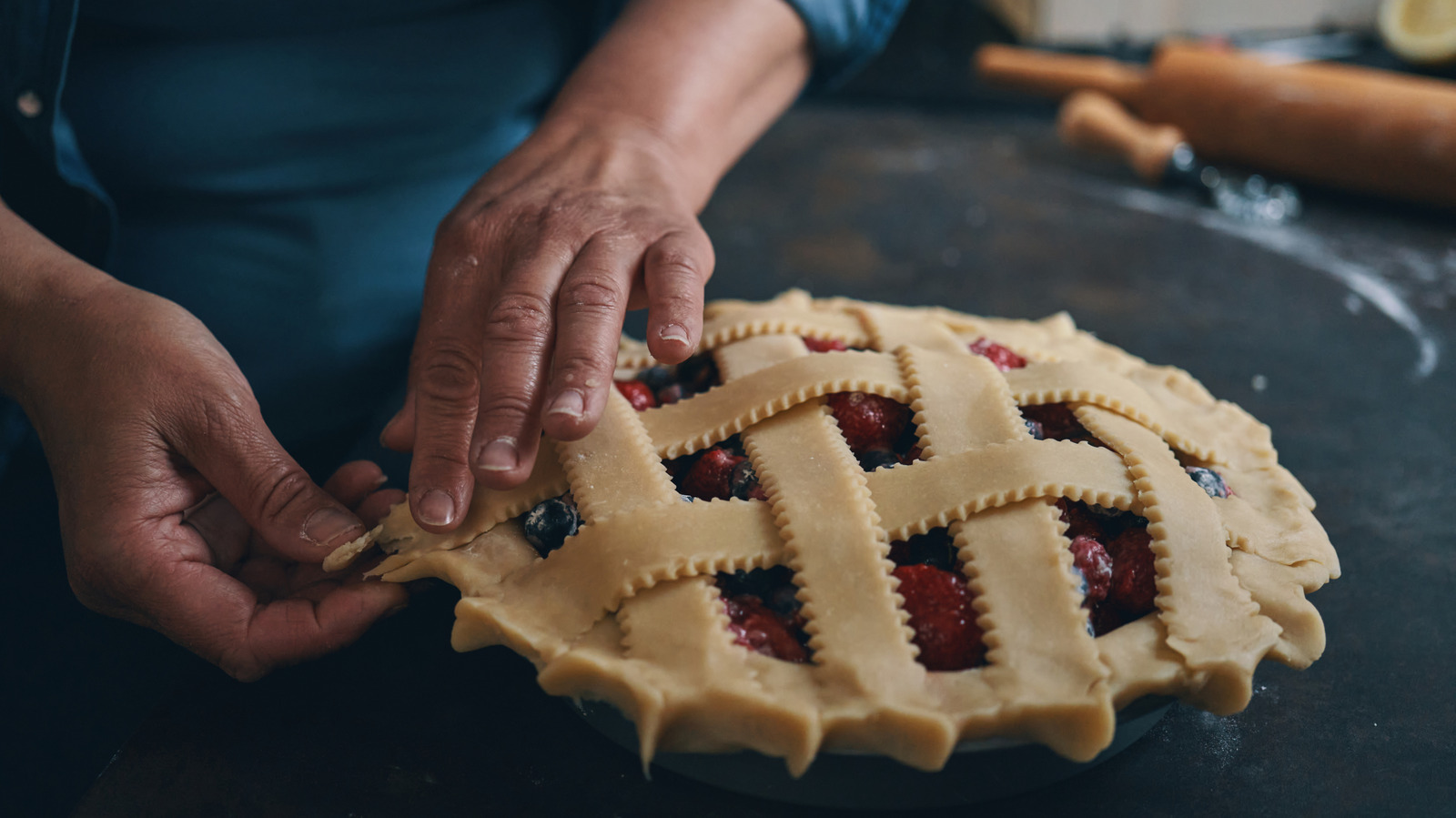
"The most common fix is to place beans or special weights in the middle of the dough, but this can get messy and cause burns. Enter, gravity. You can make life much easier by simply placing a second pie dish on top of the pastry and inverting the dishes for baking. Gravity will hold the dough down between the two pans, leading to a much better shape with higher walls, and you don't need to worry about any cumbersome beans."
"A small pedestal will help keep the two pans in place in the oven if you want to be really careful. A small cake tin works great, but you could use a soufflé dish or some ramekins too. Just center on a tray, and place the pie crust, sandwiched between the two pie dishes, on top."
"The only issue you might face is that you could lose any fancy crimping as the weight will flatten it out; additionally, the second pie dish needs to be of an identical size. But you can use the aluminum throw-away dishes from the store, and any braiding or detail on top of the walls of the crust should be preserved."
Blind baking pie crusts requires firming them up before adding liquid fillings like fruit or custard. Traditional methods use beans or weights to prevent the crust walls from collapsing, but this approach is messy and risks burns. An easier alternative involves placing a second pie dish on top of the pastry and inverting both dishes together during baking. Gravity naturally holds the dough down between the two pans, creating better shape and higher walls without cumbersome weights. A small pedestal or cake tin can stabilize the stacked pans in the oven. The main trade-off is potential loss of decorative crimping, and both pie dishes must be identical sizes.
Read at Tasting Table
Unable to calculate read time
Collection
[
|
...
]