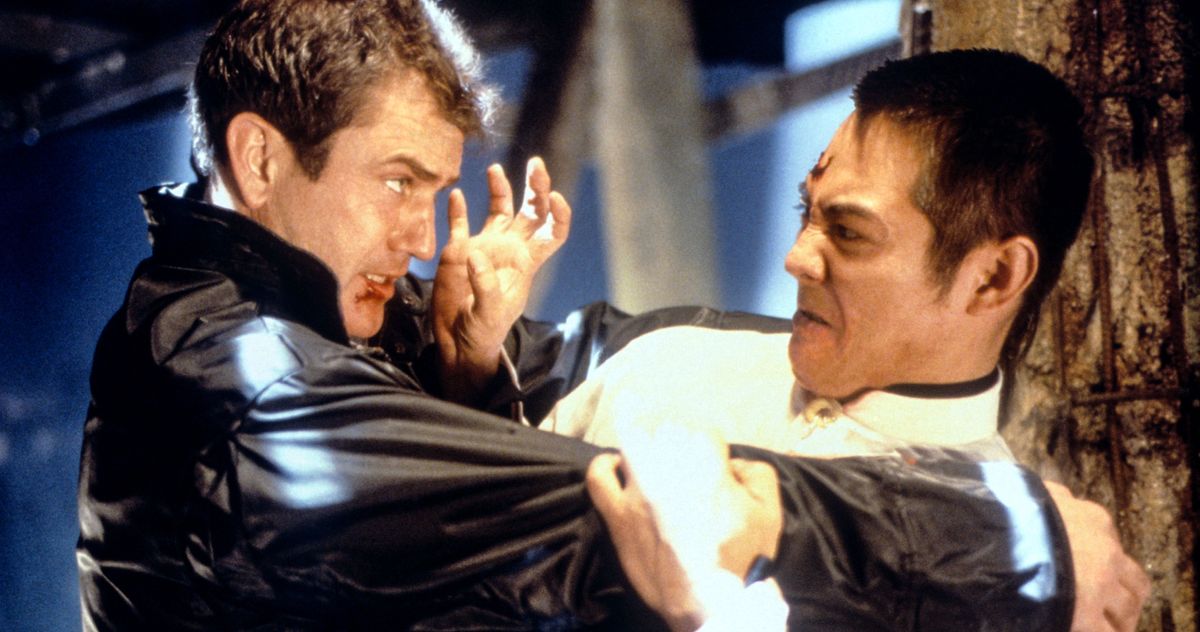
"Hollywood gave me many opportunities to practice nonattachment. Before filming even began, the studio played hardball with the contract negotiation. First, they offered me a million dollars. I said I'd think about it. The next day, they said $750,000. I said I'd think about it and discussed it with my girlfriend. The next day, they offered $500,000. I thought, Oh, I am starting to understand. This is the American game."
"In Asia, I was a big star. Directors and studios wanted to make me happy. But in America, nobody cared what I wanted. In the late '90s and early aughts, there were very few roles for Asian actors. I knew I would have to work doubly hard just to prove what I could do."
"I didn't like the role any more than she did, but I understood this was my chance to break into a new market, and I knew I had to prove myself."
The transition from Hong Kong to Hollywood marked a significant shift in career and cultural dynamics. Initial contract negotiations revealed the competitive nature of the American film industry. Unlike in Asia, where the actor was a star, Hollywood offered fewer roles for Asian actors, necessitating hard work and language acquisition. The character portrayal also changed dramatically, moving from heroic roles to playing a villain in Lethal Weapon 4. Despite personal reservations and external pressures, the opportunity to break into a new market was recognized as essential for career advancement.
Read at Vulture
Unable to calculate read time
Collection
[
|
...
]