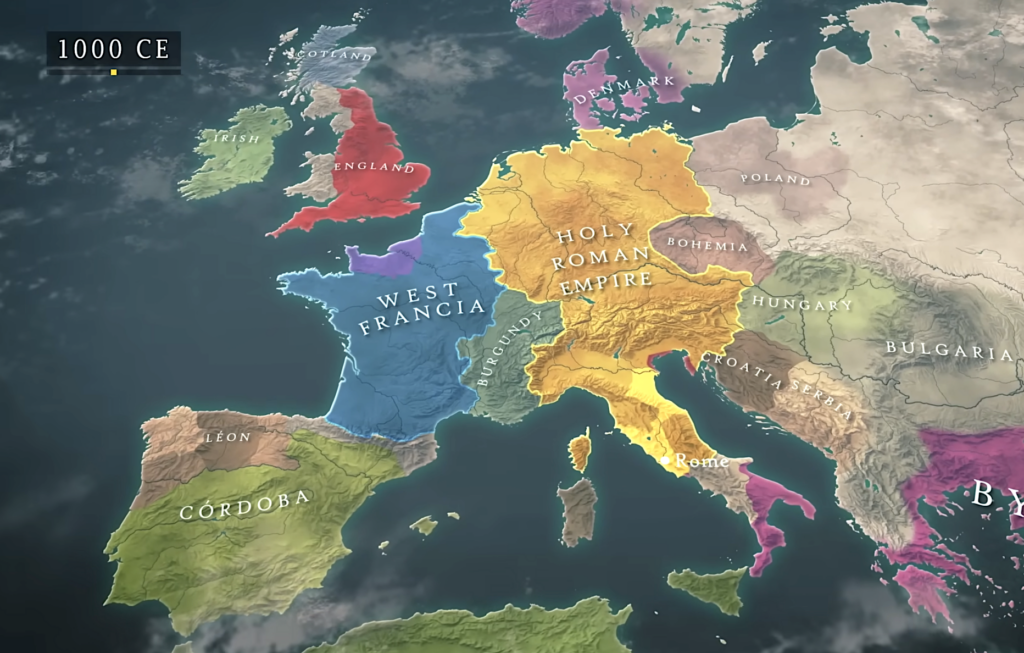
"The great cities of antiquity were depopulated, some left in ruins. The Roman transportation system decayed, eroding communication and long-distance trade. Coins vanished, leaving no economic system to support professional armies. Literacy plummeted, crippling administrative systems. And most notably, peace and security were gone."
"Events of note in that grand sweep include Justinian I's attempt to expand the Byzantine Empire of the east; the creation and spread of the Islamic caliphate; Charlemagne's unification of most of western Christendom; invasions by Vikings, Magyars, and Muslim raiders."
"The rise of castles and the feudal system that they came to symbolize; the creation of the Holy Roman Empire; the flourishing of cities and universities; and the Norman Conquest of England, as seen on the Bayeux Tapestry."
The term 'Dark Ages' is often challenged by medievalists who highlight the period's complexities. The fourth century saw the decline of great cities, a decaying Roman transportation system, and a collapse of literacy and economic structures. Despite these challenges, significant historical events unfolded, including the expansion of the Byzantine Empire, the rise of the Islamic caliphate, Charlemagne's unification of Christendom, and the establishment of the Holy Roman Empire. The era also witnessed the emergence of castles, feudalism, and the flourishing of cities and universities.
Read at Open Culture
Unable to calculate read time
Collection
[
|
...
]