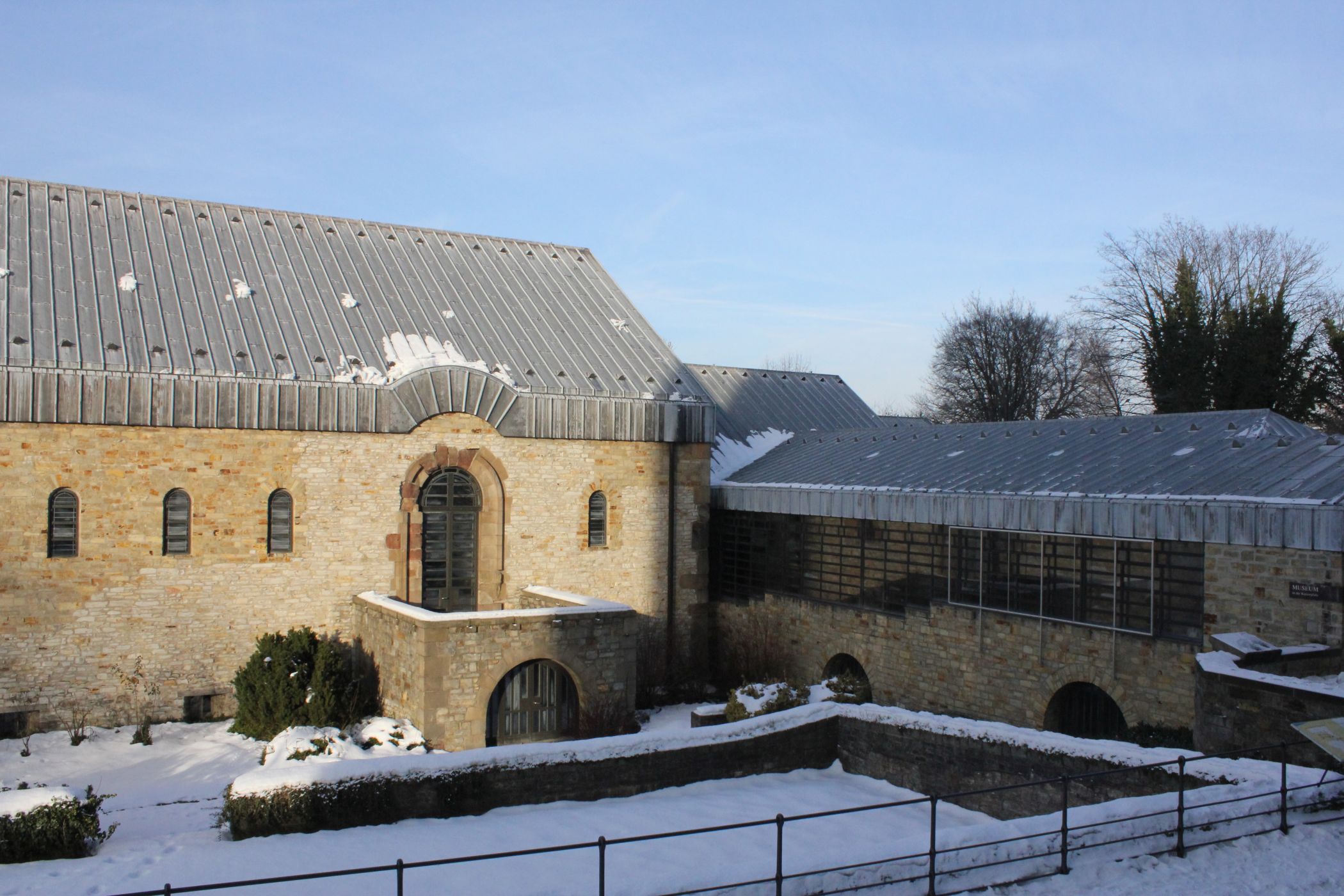
"Charlemagne returned to the region the following year and, at the source of the Lippe River, ordered the construction of a fortified camp described as a castrum. This was far more than a military outpost; it served as a religious and political beachhead where medieval sources describe "numerous Saxons, including women and children," gathering to be baptized into the Christian faith."
"One of the most intriguing threads of the exhibition is how contemporaries originally named Charlemagne's new foundation. Contemporary sources report that Charlemagne gave his new foundation a name. The Annales Petaviani refer to an "Urbs Karoli," while the Annales Mosellani report that Charlemagne "built a city or castle, which was called Karlsburg." Museum director Dr. Martin Kroker explains, "With this, the Frankish king consciously placed himself in the tradition of ancient rulers such as Alexander the Great and the Christian Emperor Constantine, who founded Constantinople.""
Year 775 marks Charlemagne's campaign against the Saxons recorded in the Royal Frankish Annals and the first written mention of the Westphalian name. Charlemagne returned in 776 and ordered construction of a fortified castrum at the source of the Lippe River. The castrum functioned as a religious and political center where numerous Saxons, including women and children, gathered to be baptized Christian. Contemporary sources refer to the foundation as Urbs Karoli or Karlsburg, linking the king to founders like Alexander and Constantine. By 777 the royal name Karlsburg had disappeared from records.
Read at Medievalists.net
Unable to calculate read time
Collection
[
|
...
]