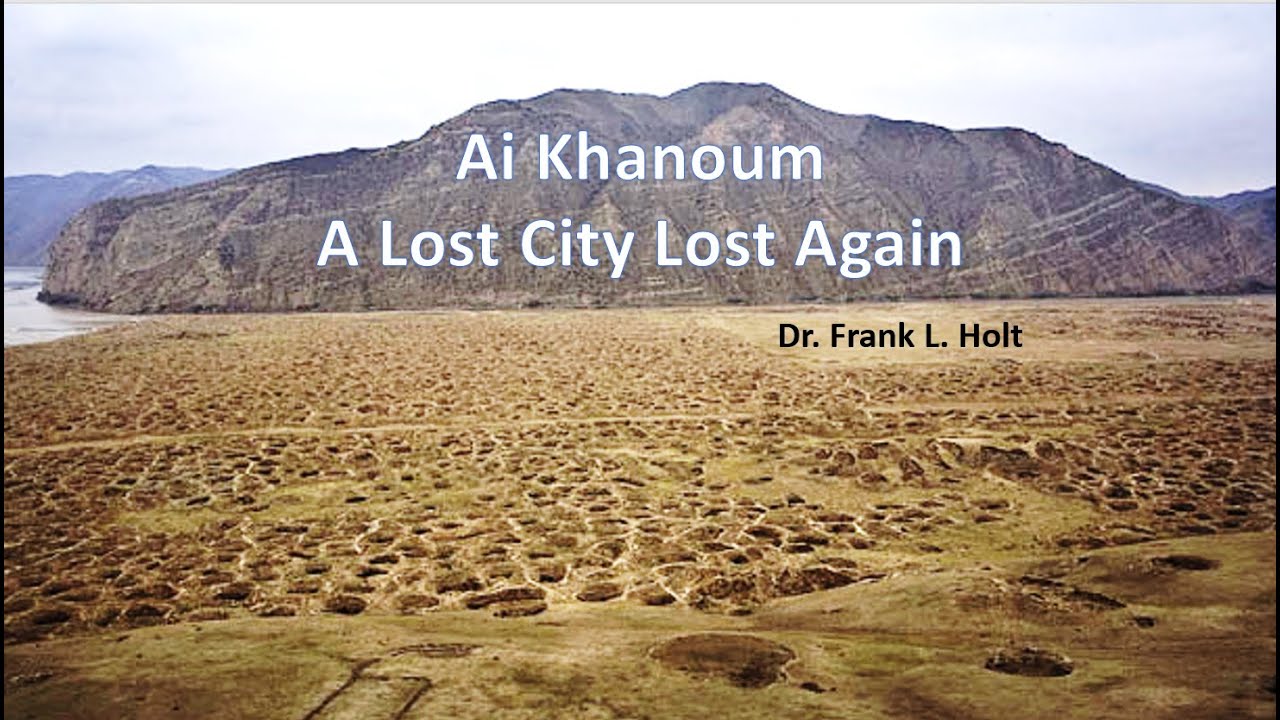
"Studying this ancient crossroad can be challenging. Today, Ai-Khanoum is in disrepair; satellite imagery shows holes dug by robbers pockmarking the site. French archaeologists fled the city following the Soviet Union's invasion of Afghanistan in 1979, and since then, Ai-Khanoum has been exposed to looters, warfare and erosion, obscuring Greek history in the region. That history starts with Alexander the Great, who marched through the area around 329 B.C.E. The conquering king left behind thousands of Greek and Macedonian settlers, often against their will."
"I think it's the center. Bactria was the hub for half the planet for centuries. Through Bactria, lapis lazuli made its way to the tomb of King Tut. It's through Bactria that silk got to Rome. It's through Bactria that Buddhism got to China. When you look at it properly, the center of the ancient world was Central Asia."
"no longer useful to him, because of age, injuries or dubious loyalty."
Ancient Ai-Khanoum in modern Afghanistan served as a Hellenistic urban center connecting East and West. French archaeology began systematic study in the 1920s, but the site had been documented earlier. Looting, war and erosion have degraded Ai-Khanoum since French teams left after the 1979 Soviet invasion. Central Asia, especially Bactria, functioned as a major trade and cultural hub transmitting lapis lazuli, silk and Buddhism across continents. Alexander the Great marched through the region around 329 B.C.E. and left thousands of Greek and Macedonian settlers who intermarried with locals and whose successor kingdoms shaped enduring, contested legacies.
Read at Smithsonian Magazine
Unable to calculate read time
Collection
[
|
...
]