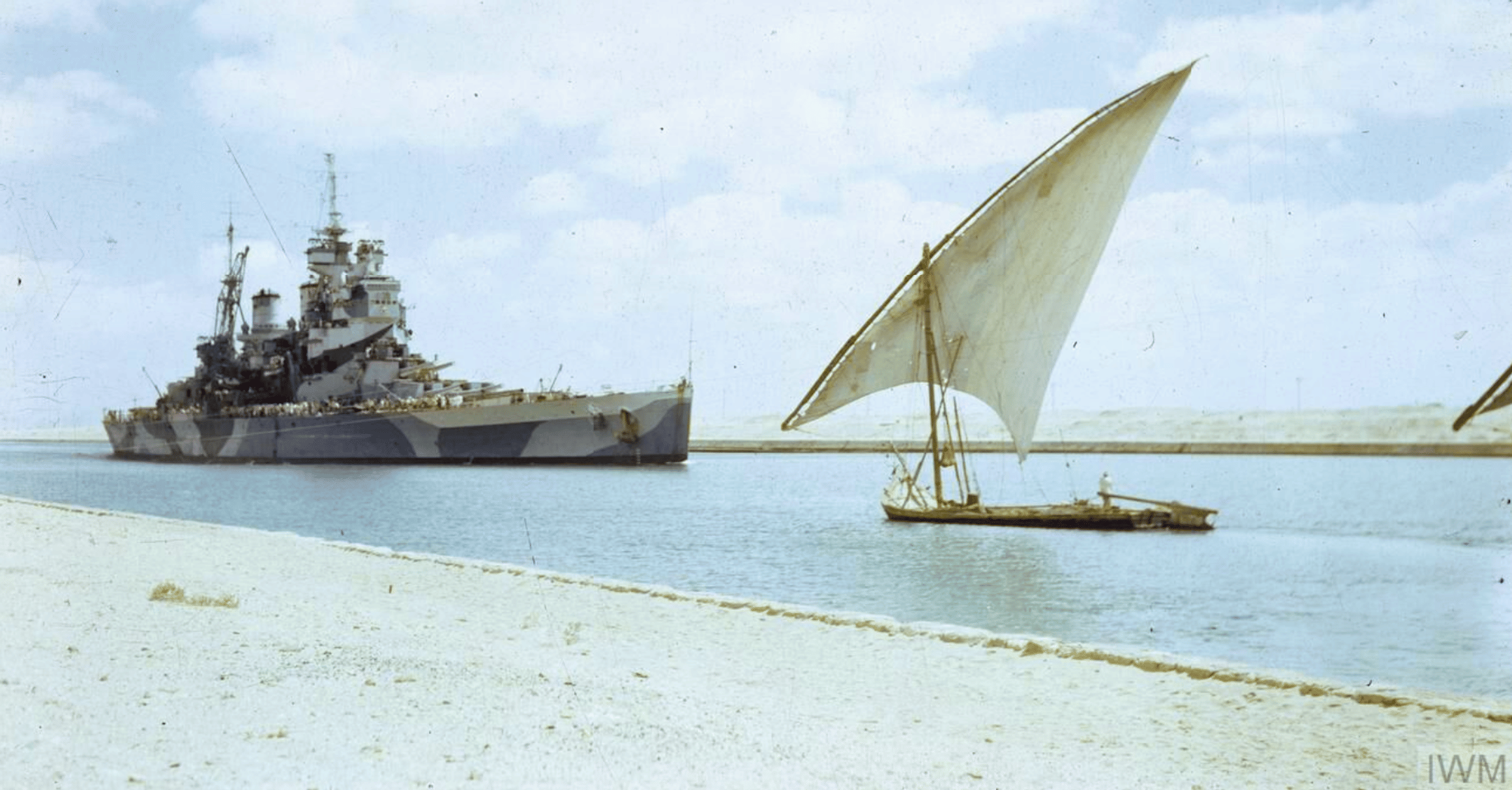
"From the 1840s, an overland route for travellers and trade goods was organised across the isthmus of Suez. This was first developed by the British officer Lieutenant Waghorn. People and goods took a ship to Alexandria on the Mediterranean coast, disembarked and crossed down to Suez using river boats and animal transport like camels, and then boarded another ship on the Red Sea coast to continue their voyage."
"The Suez Canal was built by a private French company, the Compagnie Universelle du Canal Maritime de Suez, from 1859, cutting through the isthmus of Suez. The Egyptian government leased the land for 99 years and took around 45% of the canal company's shares."
"Obviously, a waterway that permitted the same ship to perform both legs of the journey and carry cargo of any kind would be a tremendous advantage."
An artificial waterway connecting the Mediterranean to the Red Sea was conceived in antiquity to shorten shipping routes between Europe and Asia. From the 1840s, an overland crossing of the Suez isthmus was organized, using ships, river boats, camels, and later a railway built by George Stephenson. This arrangement saved four weeks compared to the Cape route but proved cumbersome for heavy cargo. The Suez Canal, constructed by the French Compagnie Universelle du Canal Maritime de Suez beginning in 1859, eliminated these limitations by allowing single ships to complete the entire journey while carrying any cargo type. The Egyptian government leased the land for 99 years and retained approximately 45% of the canal company's shares, though British opposition initially hindered the project.
Read at World History Encyclopedia
Unable to calculate read time
Collection
[
|
...
]