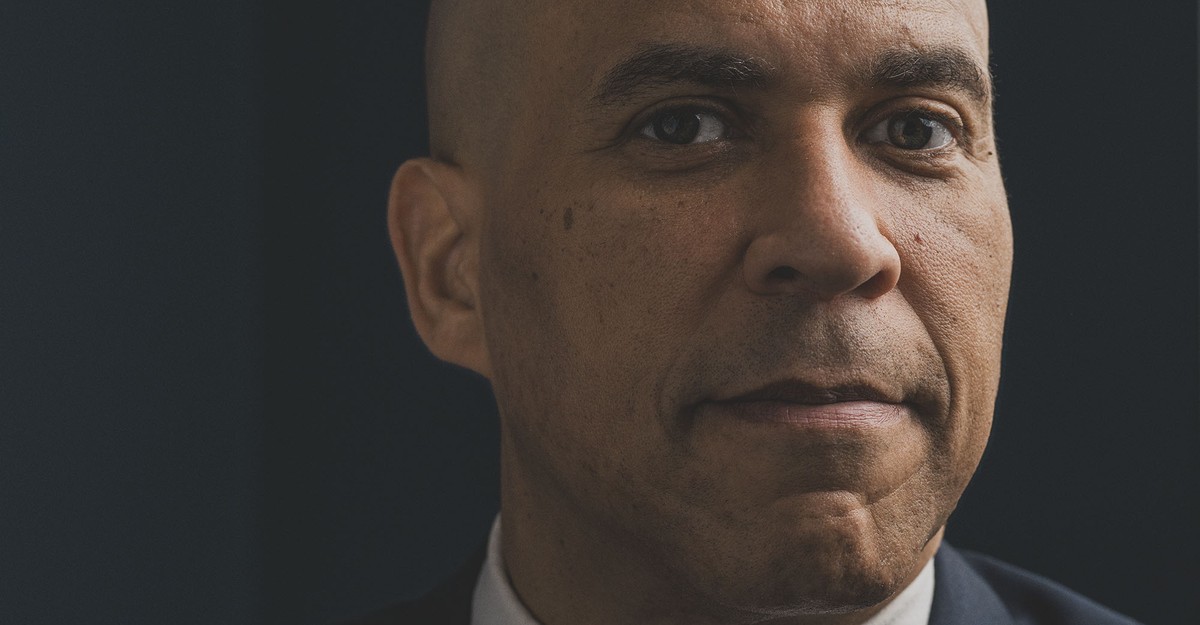
"Why do people preemptively, continually, mistake kindness for weakness? By 'people,' he means, at this moment, me. I had just brought up the festering concern, expressed by fans and critics alike, that he is simply too nice to win the presidency. Booker has been trying to convince me that he's tough enough for this uncivil American era-that a pathologically genial New Jersey Democrat who preached love in his (mostly unloved) 2020 campaign could, if called to, knock a guy on his ass."
"A coach once told Booker, 'Between the whistles, when the play starts, you are ferocious. But when the whistle's over, you help the guy up. And there's something about that that's even more scary to those who go against you.' Booker is telling stories like these to audiences around the country for a reason. Over his dozen years in Washington, his image has grown soft, and he needs Democrats to remember the brash up-and-comer who became mayor of Newark, New Jersey."
"Booker has criticized his party for not confronting the president aggressively enough during his second term; during a debate over police-funding legislation last summer, he angrily accused two Senate Democratic colleagues of complicity. Most memorably, Booker spoke out against the Trump administration for more than"
Cory Booker confronts criticism that his gentle demeanor makes him unfit for the presidency, arguing that kindness should not be mistaken for weakness. He draws on his past as a Stanford football player to demonstrate his competitive edge, recounting an incident where he nearly fought Hall of Famer Junior Seau. A coach once told him that his ferocity during play combined with his willingness to help opponents afterward created an intimidating presence. Over his dozen years in Washington, Booker's image has softened, prompting him to remind Democrats of his earlier brash persona as Newark's mayor. He has recently shown more aggressive positioning, criticizing his party for insufficient confrontation with the president and accusing Democratic colleagues of complicity during legislative debates.
#2028-presidential-campaign #cory-booker #political-image-and-perception #democratic-party-strategy #leadership-and-toughness
Read at The Atlantic
Unable to calculate read time
Collection
[
|
...
]