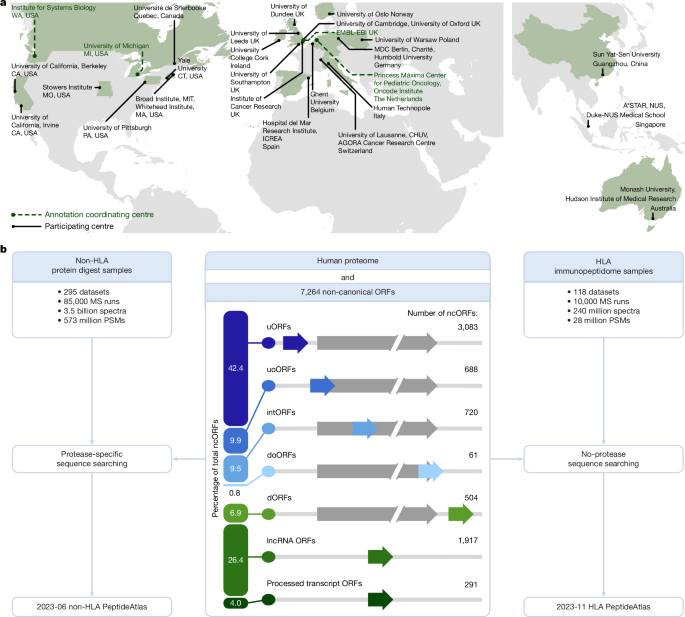
"The number of canonical protein-coding genes has been refined continuously over time, but recent evidence of translation of small polypeptide sequences from thousands of unannotated ncORFs has emerged."
"Microproteins, derived from ncORFs, are now reported widely as part of a 'dark proteome', contributing to the genetic basis of disease and mechanisms of cancer biology."
"Few microproteins have been annotated as canonical proteins due to their uncertain structure and low evolutionary constraint, complicating their classification as conventional proteins."
"The TransCODE Consortium was launched in 2022 to define standards for the reference annotation of ncORFs and their potential therapeutic applications."
The human genome's potential to encode more than 19,500 canonical protein-coding genes is under scrutiny, influencing biomedical research and drug development. Reference annotation projects like GENCODE and UniProt maintain gene curation, but recent findings of small polypeptides from unannotated ncORFs, termed microproteins, challenge traditional classifications. These microproteins are part of a 'dark proteome' and may play crucial roles in disease genetics and cancer biology. The TransCODE Consortium was established to standardize the annotation of ncORFs and their therapeutic potential.
Read at Nature
Unable to calculate read time
Collection
[
|
...
]