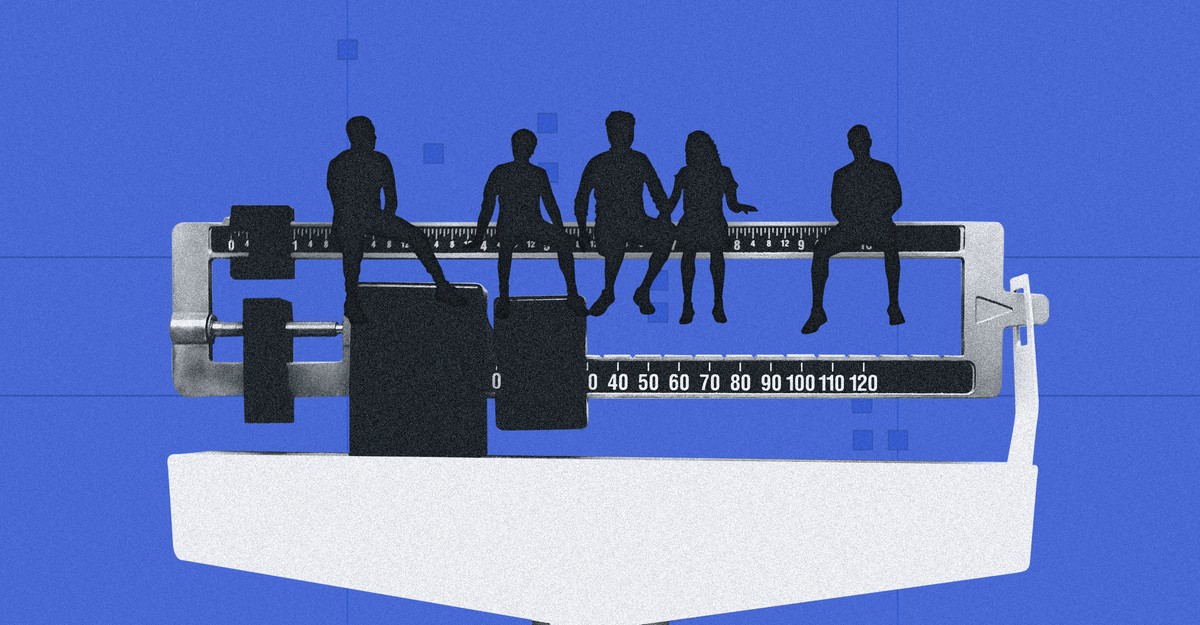
"BMI has been used for decades to diagnose and treat obesity and chronic conditions, yet it is a poor proxy for excess fat, failing to account for body composition."
"Race-based medical tools are increasingly viewed as harmful and outdated, as they often miss diagnoses and can lead to discrimination against patients."
"Despite the criticisms of BMI and race-based metrics, they are still relied upon in medical assessments, particularly for screening type 2 diabetes."
"The universal BMI cutoff of 25 for overweight is considered nonsensical by experts, as the original calculation was never intended for medical use."
BMI has been criticized for being an inadequate measure of body fat and health, as it does not account for body composition. Many individuals with high BMIs are healthy, while those with normal BMIs may face health risks. Additionally, race-based medical tools are seen as outdated and potentially harmful, as they can lead to misdiagnoses and discrimination. Despite these criticisms, BMI and race are still commonly used in medical assessments, particularly for conditions like type 2 diabetes, where their combined use may identify more at-risk individuals.
Read at The Atlantic
Unable to calculate read time
Collection
[
|
...
]