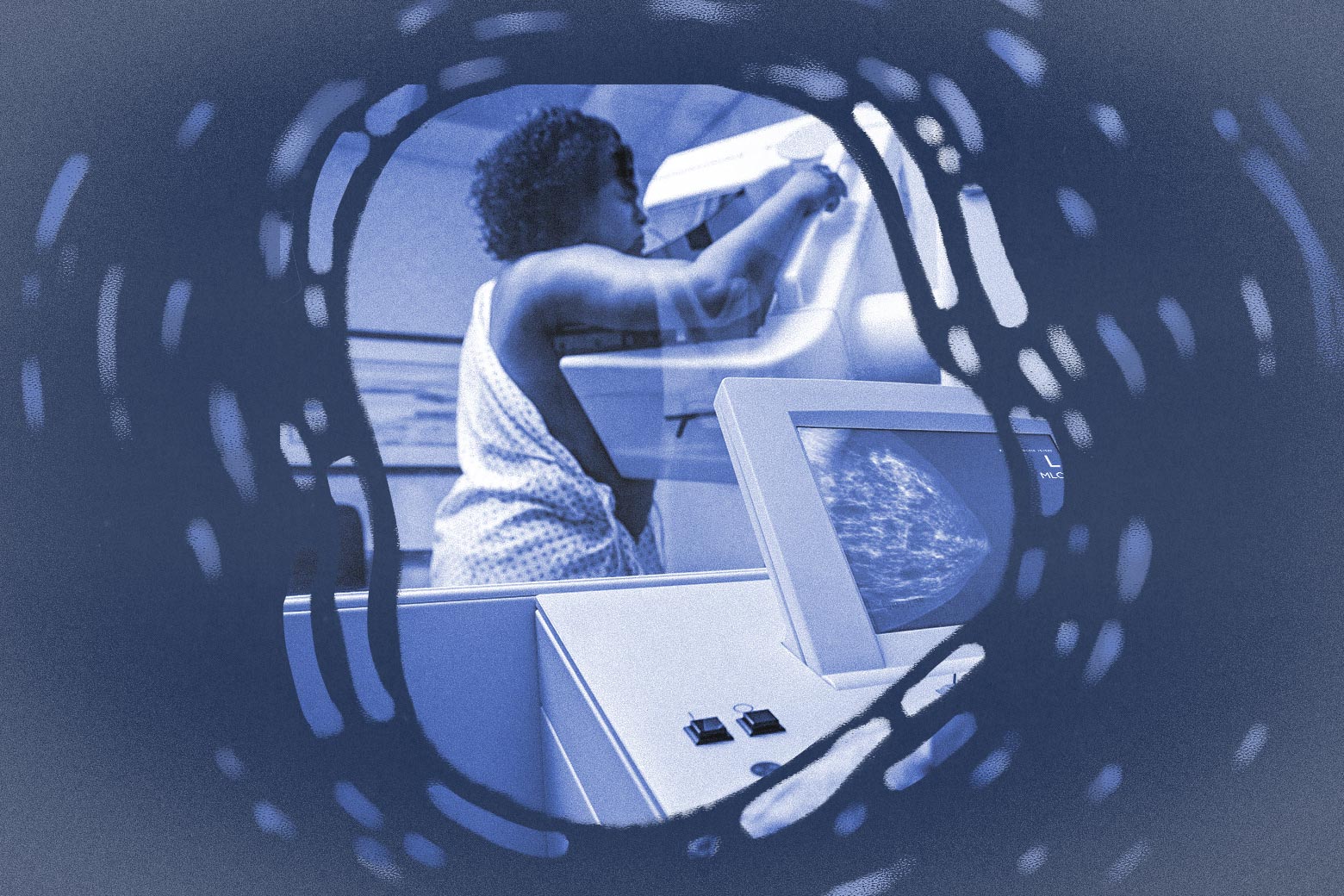
"The discovery, combined with her fibrocystic breasts -a common, noncancerous condition that can cause lumps and cysts-meant that she needed a more comprehensive diagnostic exam to investigate the symptoms. But her insurance covered just a basic screening mammogram, so she paid thousands of dollars out of pocket for the in-depth imaging, which includes an ultrasound."
"During the exam, the radiologist noted that Hamilton, who is 49, had "dense breast tissue" but did not explain further-only that she should always get extra screening exams. The results came back all clear. "It's like, 'No big deal,' right?" said Hamilton. "I thought it was OK.""
"Dense breast tissue like Hamilton's is a common condition shared by about 40 percent of women who get mammograms, according to the American Cancer Society. The characterization of dense breasts refers to how much fat, glandular tissue, and fibrous tissue are in the mix. (The condition occurs regardless of cup size.) The more glands and fibrous tissue a person has, the denser their breasts. And everyone has their own unique blend."
Allison Hamilton noticed a breast lump in 2023 and, because of fibrocystic breasts, required a comprehensive diagnostic exam. Insurance covered only a basic screening mammogram, so she paid thousands out of pocket for in-depth imaging including ultrasound. A radiologist noted dense breast tissue and recommended extra screening; results were clear. In early 2025 a painful lump prompted another diagnostic mammogram and ultrasound, paid $1,400 out of pocket, which led to a biopsy diagnosing Stage 2 triple-positive invasive lobular carcinoma. Dense breast tissue affects about 40 percent of women, increases cancer risk, and can mask tumors on mammograms.
Read at Slate Magazine
Unable to calculate read time
Collection
[
|
...
]