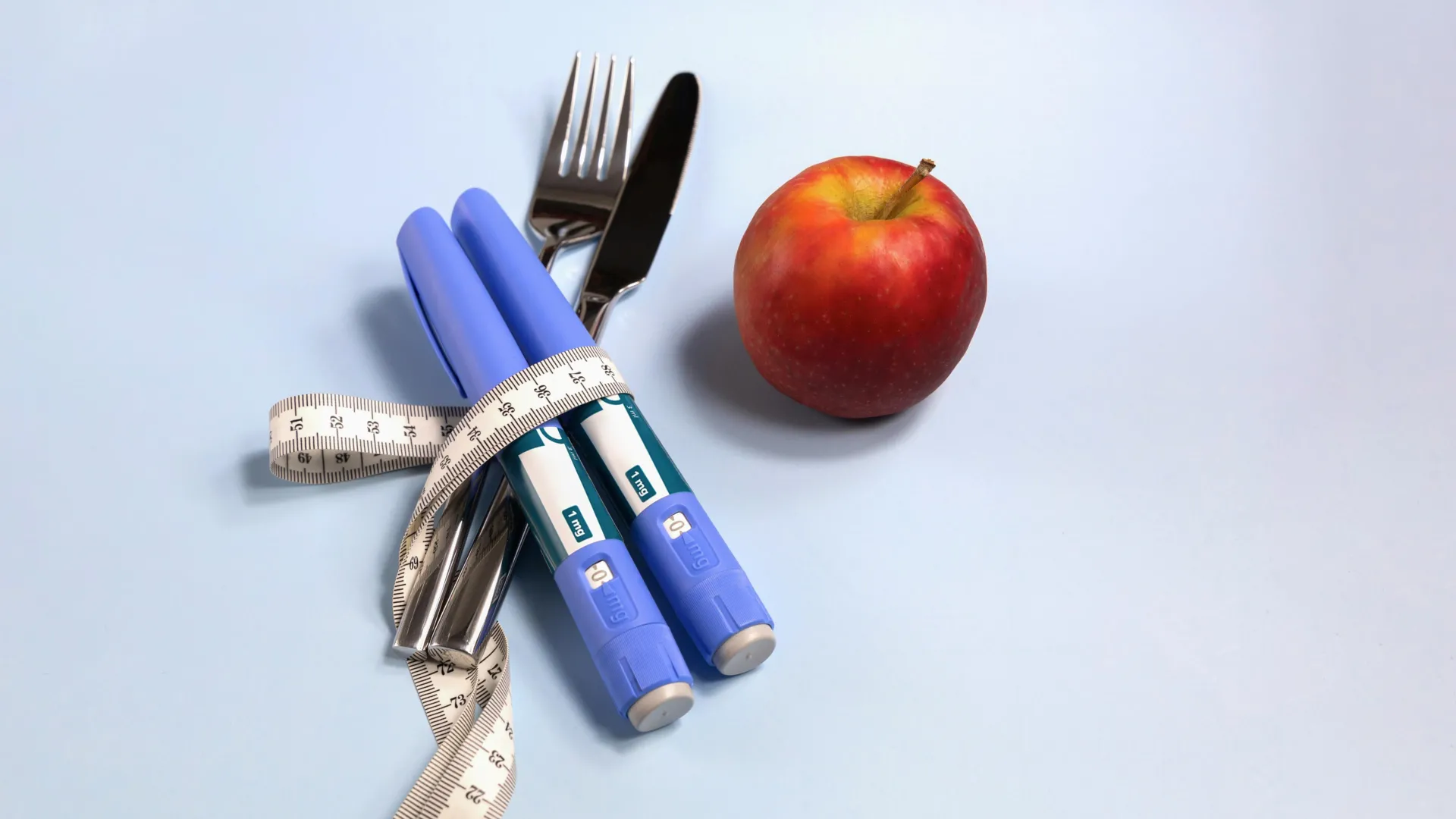
"Weight-loss drugs are powerful - but without proper nutrition support, the hidden costs may include muscle loss and nutrient deficiencies. Credit: Shutterstock Experts from UCL and the University of Cambridge warn that many people prescribed newer weight loss medications may not be receiving enough nutrition guidance to support safe, long-term weight loss. As a result, some users could face preventable risks such as vitamin and mineral deficiencies and loss of muscle mass."
"Because of these effects, calorie intake can drop by 16-39%, making the drugs highly effective for people living with obesity and overweight. However, researchers note that there has been very little study of how these medications affect overall diet quality, protein intake, or micronutrient intake (vitamins and minerals). Existing evidence suggests that lean body mass, including muscle, can make up as much as 40% of the total weight lost during treatment."
GLP-1 agonists such as semaglutide and tirzepatide reduce appetite, increase fullness, and can lower calorie intake by 16–39%. Calorie reduction can produce rapid weight loss, but up to 40% of weight lost may be lean body mass, including muscle. There is limited high-quality evidence on how nutrition advice influences calorie intake, body composition, protein intake, micronutrient status, and patient experiences during treatment. Insufficient dietary protein or micronutrient intake during medication-induced appetite suppression can lead to preventable deficiencies and muscle loss. Ongoing nutrition monitoring, protein-focused guidance, and multidisciplinary care support safer long-term outcomes.
Read at ScienceDaily
Unable to calculate read time
Collection
[
|
...
]