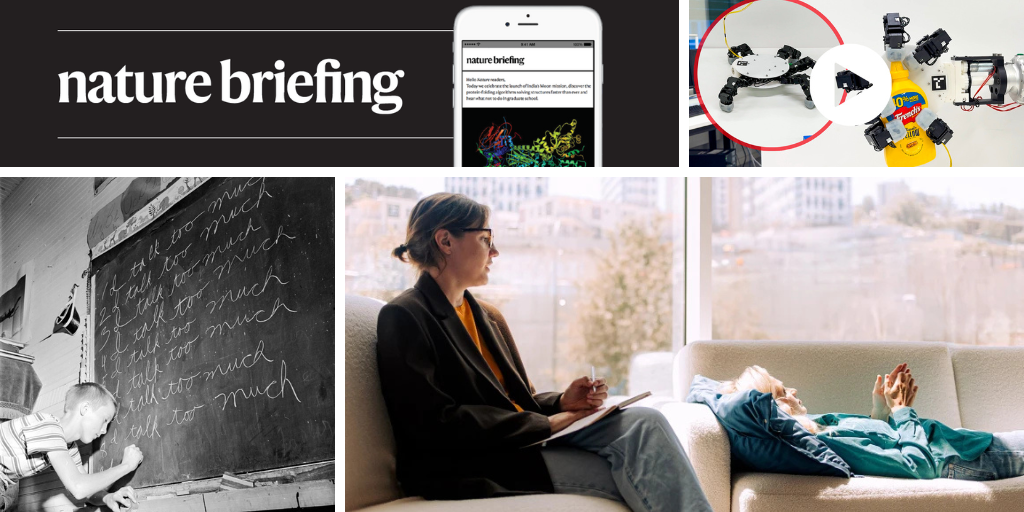
"Whether cursive has benefits over print handwriting is up for debate - some studies suggest that learning cursive equips children with better syntax skills. But there are also other, cultural reasons for keeping handwriting alive. "I feel that the next generation should be able to write a love letter or a poem by hand, or at least the grocery list, because it's part of being human, really," says neuroscientist Audrey van der Meer."
"The American Psychiatric Association has announced plans to update The Diagnostic and Statistical Manual of Psychiatric Disorders ( DSM) - the textbook that lists symptoms for all known mental conditions and aims to steer health professionals towards a correct diagnosis. The updates aim to address longstanding criticisms of the current edition, such as the lack of acknowledgement of sociocultural or environmental drivers of mental illness."
Vividness of mental imagery can influence memory performance and creative thinking by affecting how clearly people picture images. Some schools are reintroducing cursive handwriting in classrooms, with some studies linking cursive learning to improved syntax skills and cultural arguments supporting handwriting practice. The American Psychiatric Association plans to update the Diagnostic and Statistical Manual of Psychiatric Disorders to address criticisms and to incorporate sociocultural and environmental drivers of mental illness, and to consider dimensional approaches to diagnosis. Biotech company Merge Labs aims to develop ultrasonic brain–computer interfaces to read mental states and treat conditions without deep implants. Efforts continue to advance the Global Plastics Treaty.
Read at Nature
Unable to calculate read time
Collection
[
|
...
]