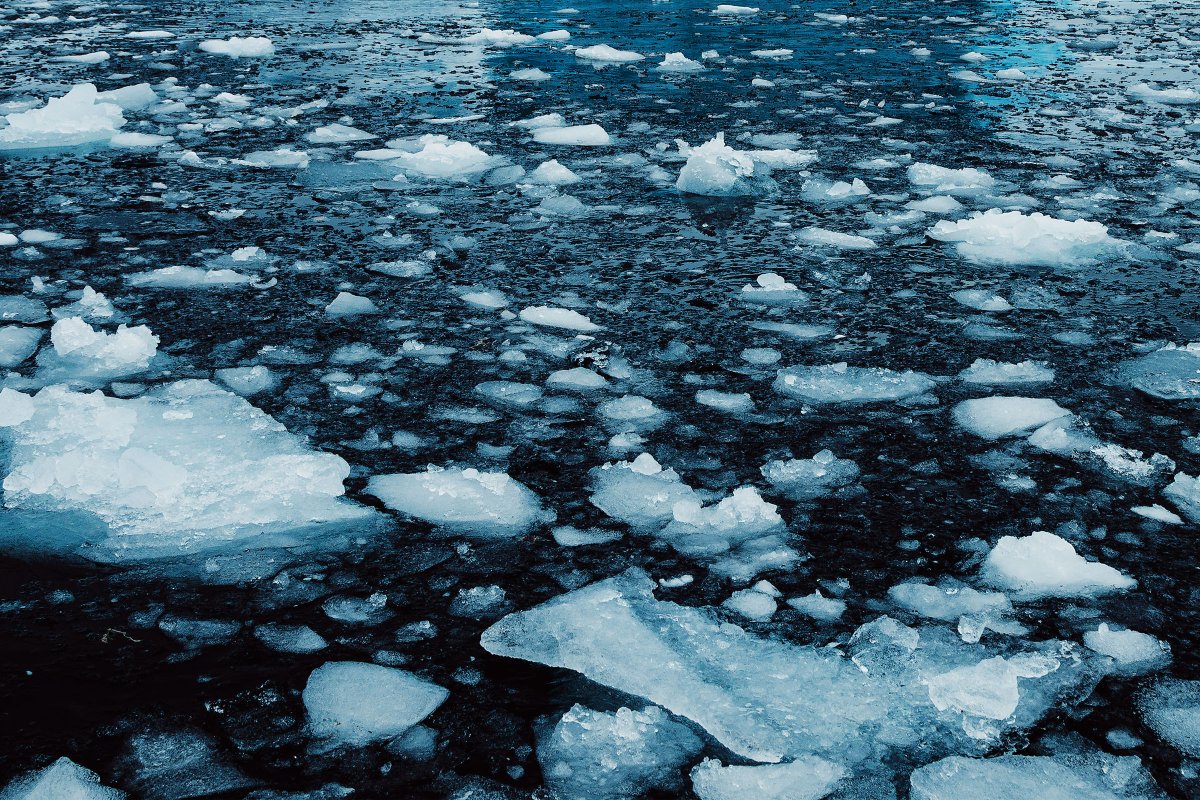
A 45-kilometer ice shelf in front of the Thwaites glacier in Antarctica is breaking away, with satellite imagery showing major fissures where the shelf connects to the glacier. The Thwaites glacier is often called the “doomsday glacier” because it is viewed as a climate tipping point. Scientists warn that the collapse could trigger a domino effect across the West Antarctic Ice Sheet, which contains enough ice to raise global sea levels by 13 to 16 feet. Researchers attempted to deploy instruments on the rapidly decaying ice but failed to plant equipment under the glacier. Measurements from beneath the glacier’s main trunk indicate that surrounding waters are warmer and flow faster than previously believed, helping explain the rapid collapse.
"A 45 kilometer ice shelf in front of the Thwaites glacier in Antarctica - nicknamed the “doomsday glacier” by some for its role as tipping point for the global climate - is about to break away. Satellite imagery shows that the ice shelf is actively breaking away, with major fissures visible around the point where the sheet connects to the broader glacier. As University of Innsbruck in Austria geophysicist Christian Wild told the New Scientist, “suddenly, large areas are just falling to pieces. It looks like a windscreen that’s shattering.”"
"About the size of Britain, scientists are concerned the Thwaites’ collapse will set off a sort of domino effect across the West Antarctic Ice Sheet, which holds enough ice to raise the global sea level by anywhere from 13 to 16 feet. Earlier this year, a team of researchers and engineers scrambled to set up camp on the rapidly decaying ice sheet, where they planned to fasten scientific instruments to monitor the ongoing collapse."
"Though the team ultimately failed to plant monitoring equipment under the glacier as planned, they still managed to take some valuable measurements from beneath the “main trunk” of the glacier. That data showed the waters below the Thwaites are much warmer and faster flowing than previously thought, providing a hint as to why the glacier is collapsing at such a rapid pace. While the sheet is still attached to the glacier for now, it’s really only a matter of time until it breaks off completely."
Read at Futurism
Unable to calculate read time
Collection
[
|
...
]