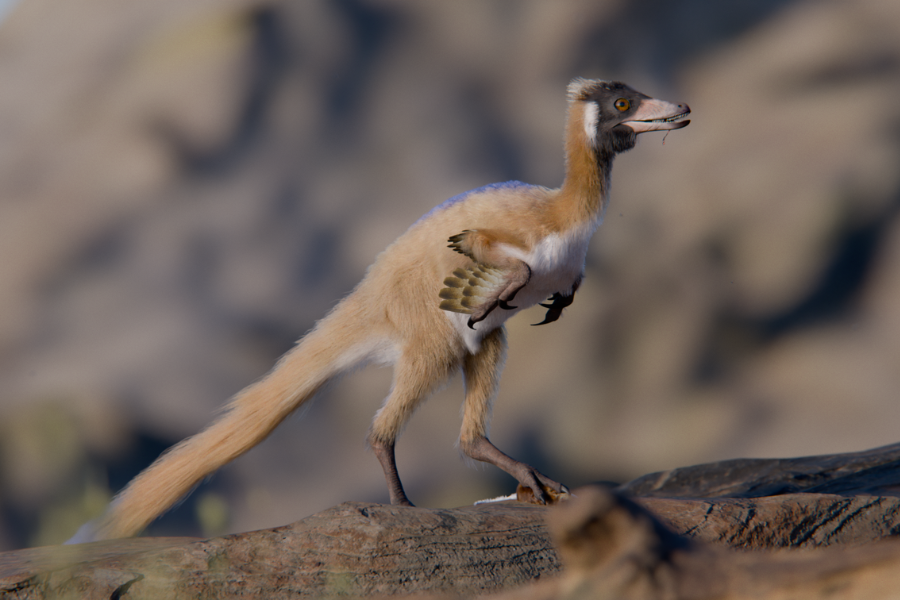
"Alverezsaurids were mostly small-bodied theropods that paleontologists originally misinterpreted as early flightless birds, only to later recognize them as an ant-eating lineage of non-avian dinosaurs. For years, we suspected that Alvarezsaurids underwent a rare process of evolutionary miniaturization directly coupled to a diet of social insects like ants and termites."
"This new species, called Alnashetri cerropoliciensis, probably did not feed on ants at all. 'It was a pursuit predator actively hunting insects and small mammals,' said Peter Makovicky, a paleontologist at the University of Minnesota."
"Alverezsaurids, found mostly in the Late Cretaceous rocks of Asia and South America, had short forelimbs tipped with a single oversized thumb claw built for digging. They also had minute teeth and sensory adaptations akin to those in modern nocturnal birds-everything necessary to work on termite mounds."
Alvarezsaurids were small theropods initially mistaken for early flightless birds, later recognized as a non-avian dinosaur lineage. Paleontologists previously hypothesized that these dinosaurs underwent evolutionary miniaturization directly linked to ant and termite consumption. A newly discovered fossil of Alnashetri cerropoliciensis, one of the smallest alvarezsaurids ever found, challenges this linear evolutionary model. This species, discovered in Argentina's Candeleros Formation and dating to approximately 90 million years ago, shows no specialized adaptations for ant-eating. Instead, evidence suggests it was an active pursuit predator hunting insects and small mammals, indicating that body size reduction occurred before dietary specialization in this lineage.
Read at Ars Technica
Unable to calculate read time
Collection
[
|
...
]