"Prominent theories of consciousness propose that sophisticated pattern recognition, semantic interpretation and predictive processing all require conscious access, particularly when these computations involve integration across multiple timescales or abstraction beyond immediate sensory features."
"Evidence from psychology and neuroscience suggests that substantial processing can occur outside awareness, including perceptual discrimination, statistical learning and aspects of language comprehension."
"Although anaesthesia profoundly alters large-scale brain dynamics and suppresses behavioural responsiveness, several studies have reported residual sensory responses in early cortical areas during anaesthetized states."
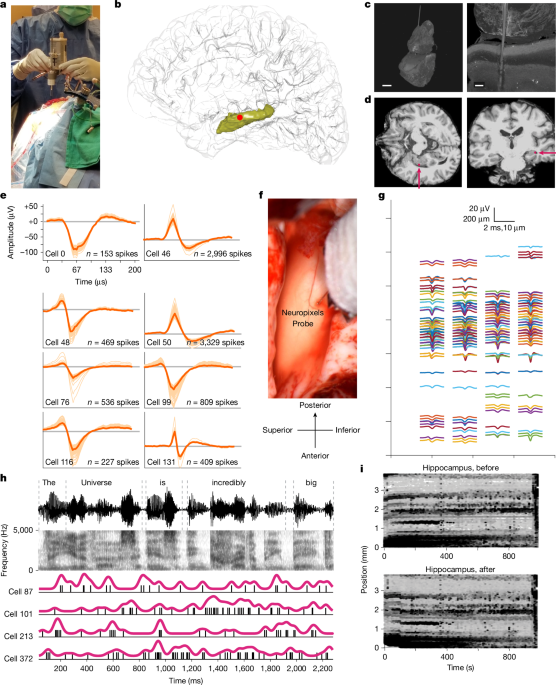
"We examined whether neural correlates of higher-order processing persist during anaesthesia in the hippocampus—a region anatomically and functionally distant from primary sensory and motor systems."
Cognitive neuroscience investigates the role of conscious awareness in complex information processing. While some theories suggest that advanced processing requires consciousness, evidence indicates that significant processing can occur unconsciously. General anaesthesia serves as a model to study this phenomenon, revealing that even during unconsciousness, neural circuits may still encode and transform sensory information. Research involving hippocampal recordings during anaesthesia shows that higher-order processing may continue, challenging traditional views on the necessity of consciousness for complex cognitive functions.
Read at Nature
Unable to calculate read time
Collection
[
|
...
]