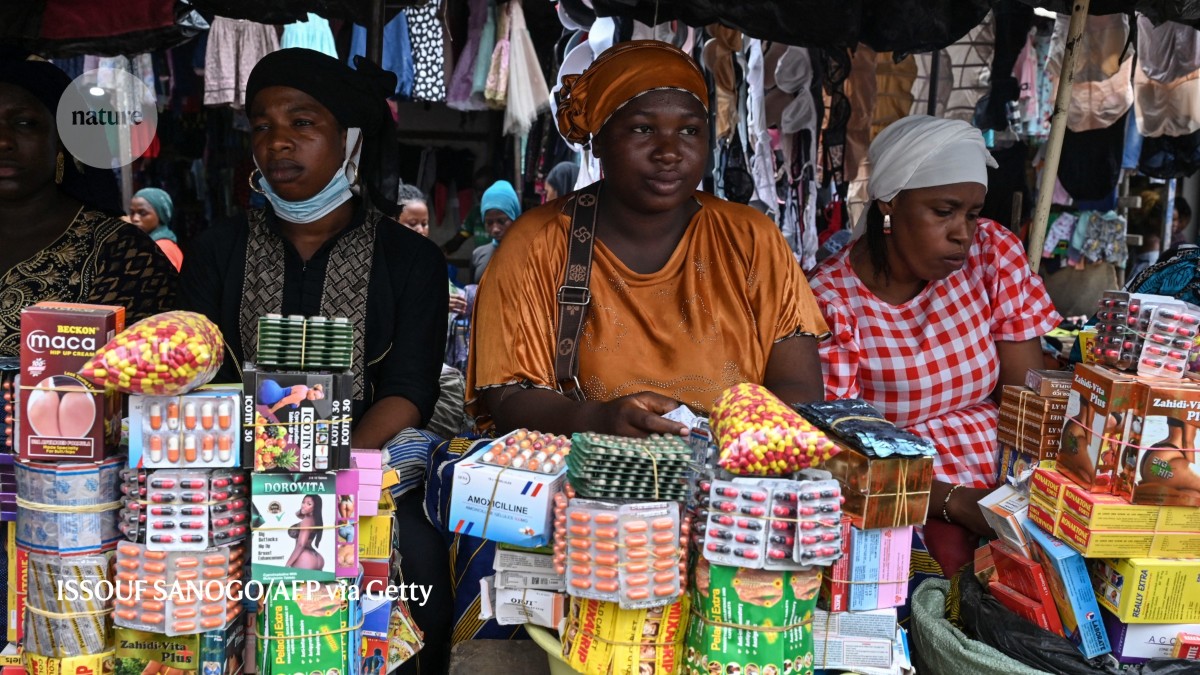
"Because many Ghanaians lack access to physicians, those who fall ill often end up buying antibiotics from unauthorized sellers instead. "We have people who go around carrying all sorts of things, who would mix them as concoctions and give them to patients who have no clue what is going on," explains Antoinette Bediako-Bowan, a surgeon at the Korle Bu Teaching Hospital in Accra. By the time a person presents at the hospital, "they really have taken quite a number of antibiotics", Bediako-Bowan says. Such liberal use of the drugs gives bacteria the opportunity to adapt, driving resistance."
"The World Health Organization (WHO) divides antibiotics into three categories under its Access, Watch and Reserve (AWaRe) system. Access antibiotics are used against common infections, watch antibiotics can fight a wider range of bacteria and reserve antibiotics are held back for the most dangerous pathogens. Bediako-Bowan says that in the hospital where she works, around 60% of patients have infections that can resist common access antibiotics, such as penicillins and first-generation cephalosporins."
"More worryingly, she says, around 4% of these are resistant to carbapenems, which are on the watch and reserve lists. Carbapenems are often the strongest option available in Bediako-Bowan's hospital, so "even a small percentage is a big thing". In 2023, according to the WHO, one in six laboratory-confirmed bacterial infections worldwide were caused by bacteria that are resistant to antibiotics."
"The burden of antibiotic resistance is highest in low- and middle-income countries (LMICs), and growing rapidly. Between 2018 and 2023, resistance to imipenem - a carbapenem antibiotic - in Acinetobacter bacteria grew faster in the eastern Mediterranea"
Antibiotics are increasingly failing at Ghana’s largest hospital as bacteria adapt to frequent exposure. Limited access to physicians leads many people to buy antibiotics from unauthorized sellers who may mix or concoct drugs and provide them without proper guidance. By the time patients reach Korle Bu Teaching Hospital, they often have already taken multiple antibiotics. This liberal use creates opportunities for bacteria to develop resistance. Around 60% of hospital patients have infections resistant to common Access antibiotics, including penicillins and first-generation cephalosporins. About 4% of these infections resist carbapenems, which are among the strongest options available. Globally, one in six laboratory-confirmed bacterial infections involves resistant bacteria, with the highest and fastest-growing burden in low- and middle-income countries.
Read at Nature
Unable to calculate read time
Collection
[
|
...
]