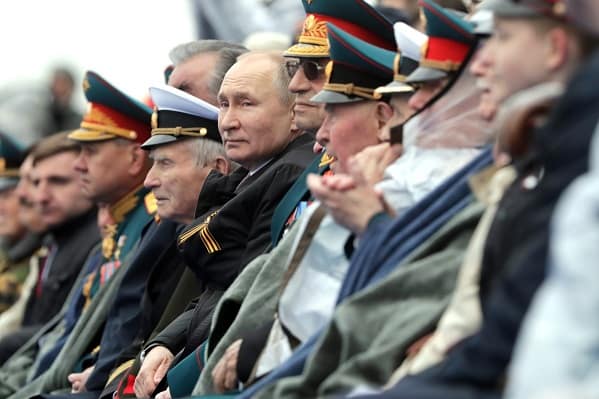
"May 9 in Russia is officially observed as "Victory Day," marking Nazi Germany's surrender in 1945, but it has also become a deeply politicised national ritual - one that the Kremlin uses to reinforce themes of sacrifice, military strength and historical continuity."
"Under Vladimir Putin, the commemorations have increasingly been framed not just as remembrance of the Second World War, but as a broader narrative about Russia's identity and its role in defeating fascism. The annual parade in Moscow's Red Square is now a central state event that combines historical memory with modern military displays."
"That said, the history of the war itself is far more complex than any single national narrative. The defeat of Nazi Germany in 1945 was achieved through a wide coalition of Allied forces across multiple fronts, including the Soviet Union, the United States, Britain, and resistance movements across occupied Europe."
"However, mainstream historical accounts do not support the idea that Vlasov's Russian Liberation Army played a decisive role in the liberation of Prague or the end of the war. Instead, Prague was primarily liberated by advancing Soviet forces alongside elements of the First and Fourth Ukrainian Fronts, with local resistance forces also playing a role in the uprising against German occupation."
May 9 in Russia is observed as Victory Day, marking Nazi Germany’s surrender in 1945. The commemorations have become a politicised national ritual that reinforces themes of sacrifice, military strength, and historical continuity. Under Vladimir Putin, the framing extends beyond remembrance of the Second World War to a broader narrative about Russia’s identity and its role in defeating fascism. The Moscow parade in Red Square functions as a central state event combining historical memory with modern military displays. The war’s outcome involved a wide multinational coalition across multiple fronts, including the Soviet Union, the United States, Britain, and resistance movements. Prague’s liberation is primarily attributed to advancing Soviet forces and local resistance, not to Vlasov’s Russian Liberation Army. Memory of the war remains politically contested, though consensus emphasizes a multinational Allied victory.
Read at London Business News | Londonlovesbusiness.com
Unable to calculate read time
Collection
[
|
...
]