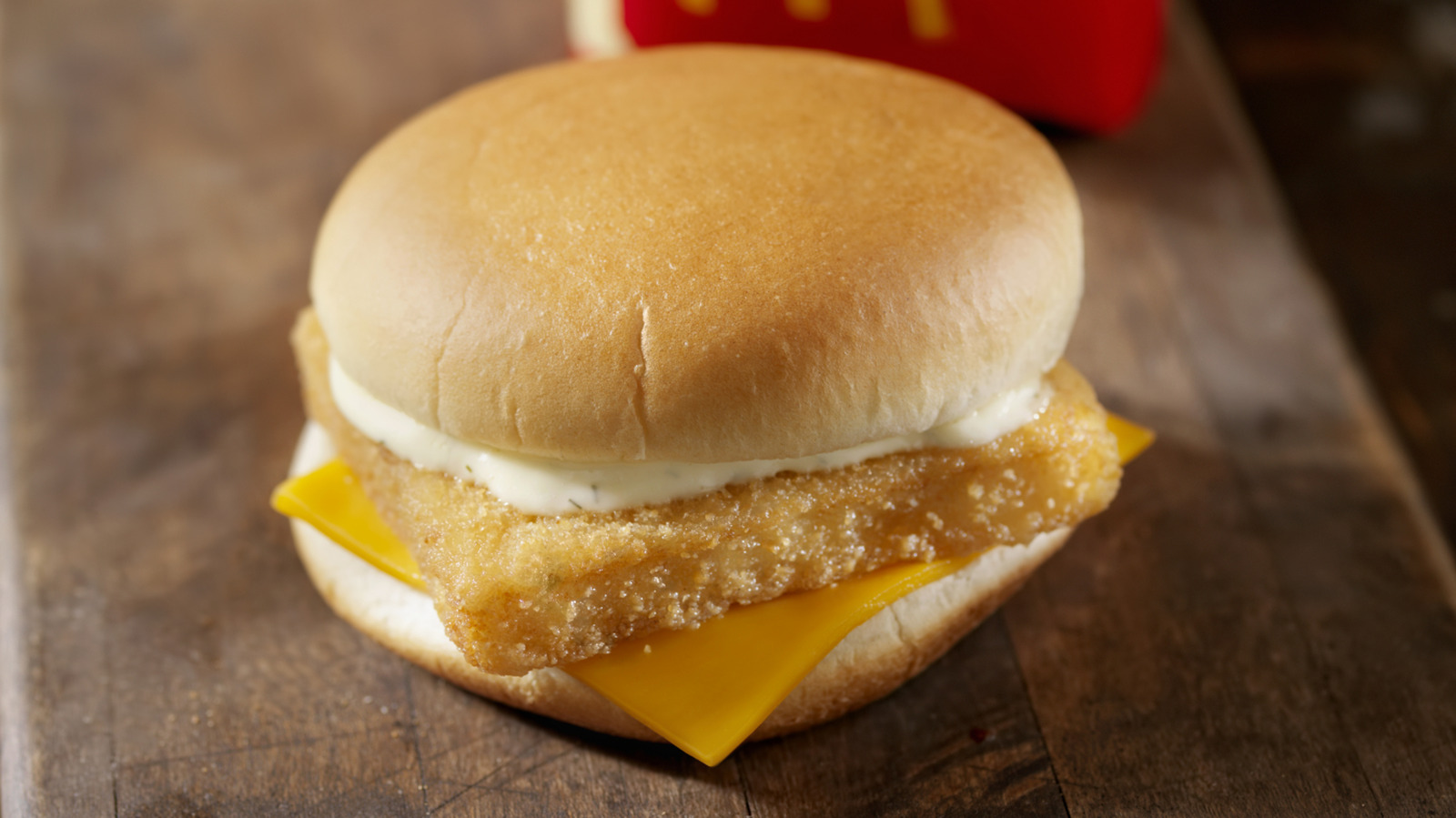
"Alaskan pollock is a delicate, buttery white fish prized for its mild, accessible flavor and flaky texture. McDonald's Filet-O-Fish tops its pollock patty with American cheese and a dollop of sweet-creamy tartar sauce, all served on a soft steamed bun."
"At Burger King, the Big Fish sandwich breads that pollock patty in a crispier panko breading. It shares the Filet-O-Fish's tartar sauce, but instead of cheese, BK's Big Fish is topped with lettuce and pickle coins, contributing an added crunchy textural element and a note of bright acidity."
"BK's Big Fish sandwich is served on a toasted potato bun - which lends both a note of sweetness to the overall flavor profile, as well as a toothier structure than McDonald's softer steamed bun. This tougher bun vehicle also makes utilitarian sense, considering the aptly-named Big Fish is a slightly larger sandwich."
Both McDonald's Filet-O-Fish and Burger King's Big Fish sandwich feature breaded and fried Alaskan pollock patties, yet deliver distinctly different flavor experiences. McDonald's version combines the pollock with American cheese and tartar sauce on a soft steamed bun, creating a savory profile. Burger King's Big Fish uses crispier panko breading and tops the pollock with lettuce and pickle coins instead of cheese, adding crunch and acidity. The toasted potato bun on Burger King's sandwich provides sweetness and structural integrity compared to McDonald's softer bun. These differences extend to nutritional content, with Burger King's larger sandwich containing 570 calories and 19 grams of protein versus McDonald's 380 calories and 16 grams of protein. The pollock sourcing may also contribute to flavor variations.
Read at Tasting Table
Unable to calculate read time
Collection
[
|
...
]