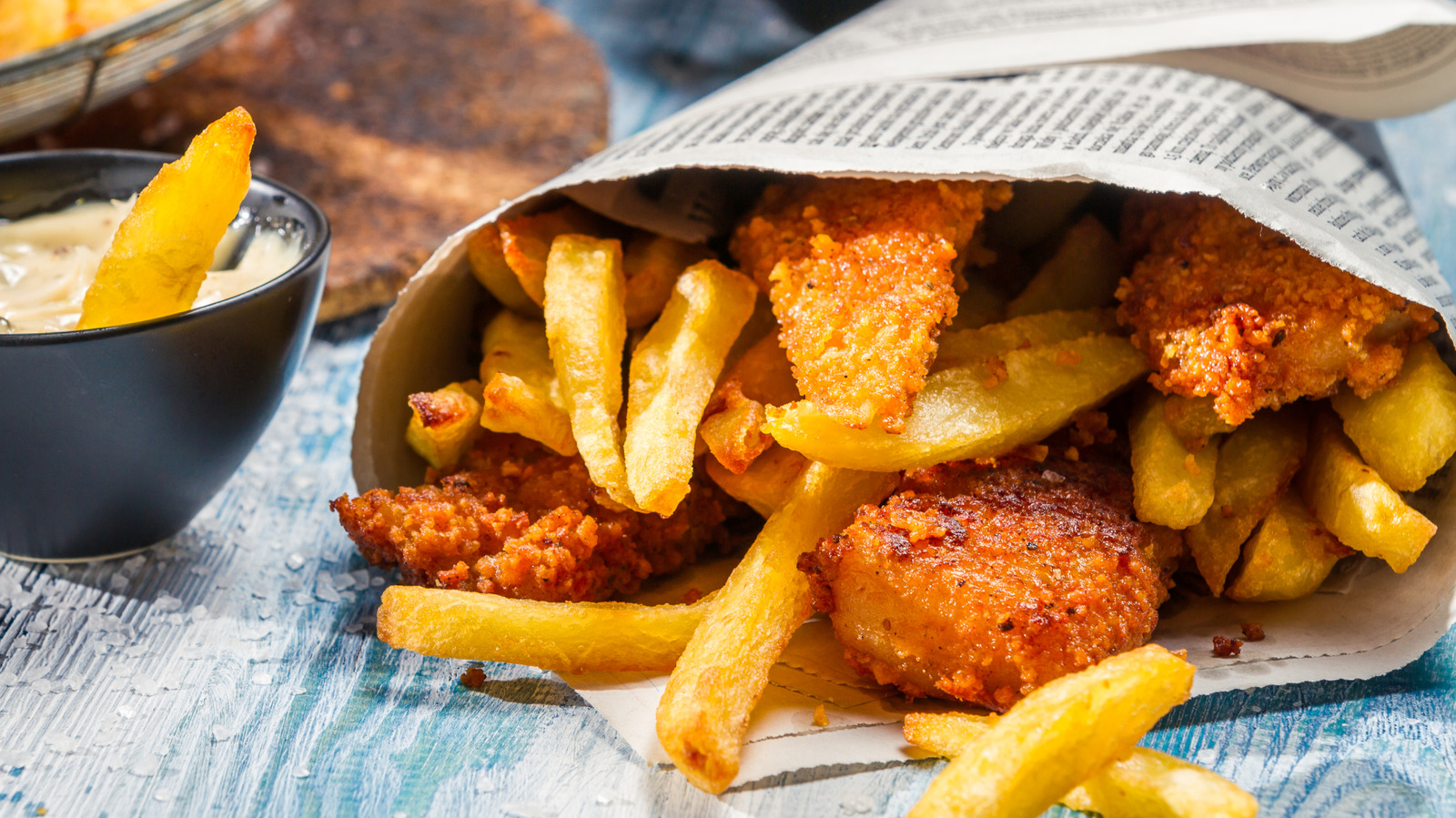
"It was a cheap and easy way to wrap the food while absorbing some of the excess grease. It was also potentially toxic. It seems like few people thought about it at the time, but the ink used in newspapers is not food safe, nor is an old newspaper particularly sanitary. You may not have touched a real newspaper in a while, but if you recall, that ink smudges very easily and gets on your fingers."
"A regulation from 1976 said that anything that comes in contact with food must not change its composition, appearance, taste, or smell. But newspaper ink did all of that. Due to fears of toxicity and health concerns, newspaper was no longer permitted as fish and chip wrap. Consider this another food safety law that no one followed back in the day."
"The newspaper tradition started during wartime when there was a shortage of paper, so reusing old newspapers made sense. Newspaper sellers would give unsold newspapers instead of hauling them away, and the papers made for a free and simple wrapper. This kept costs down and eventually became iconic."
Fish and chips shops historically wrapped meals in newspaper, a practice that began during wartime paper shortages when unsold newspapers were repurposed as free, cost-effective wrappers. Newspaper ink, however, is not food-safe and easily transfers to skin and food. The ink smudges readily and contaminates oily foods, causing consumers to ingest printing chemicals. The EU recognized these health hazards and established food contact material regulations in 1976, prohibiting newspaper use because it altered food composition, appearance, taste, and smell. This regulation eliminated a widespread but toxic practice that persisted for decades despite its dangers.
#food-safety-regulations #fish-and-chips-history #newspaper-wrapping #eu-food-contact-materials #toxic-ink-contamination
Read at Tasting Table
Unable to calculate read time
Collection
[
|
...
]