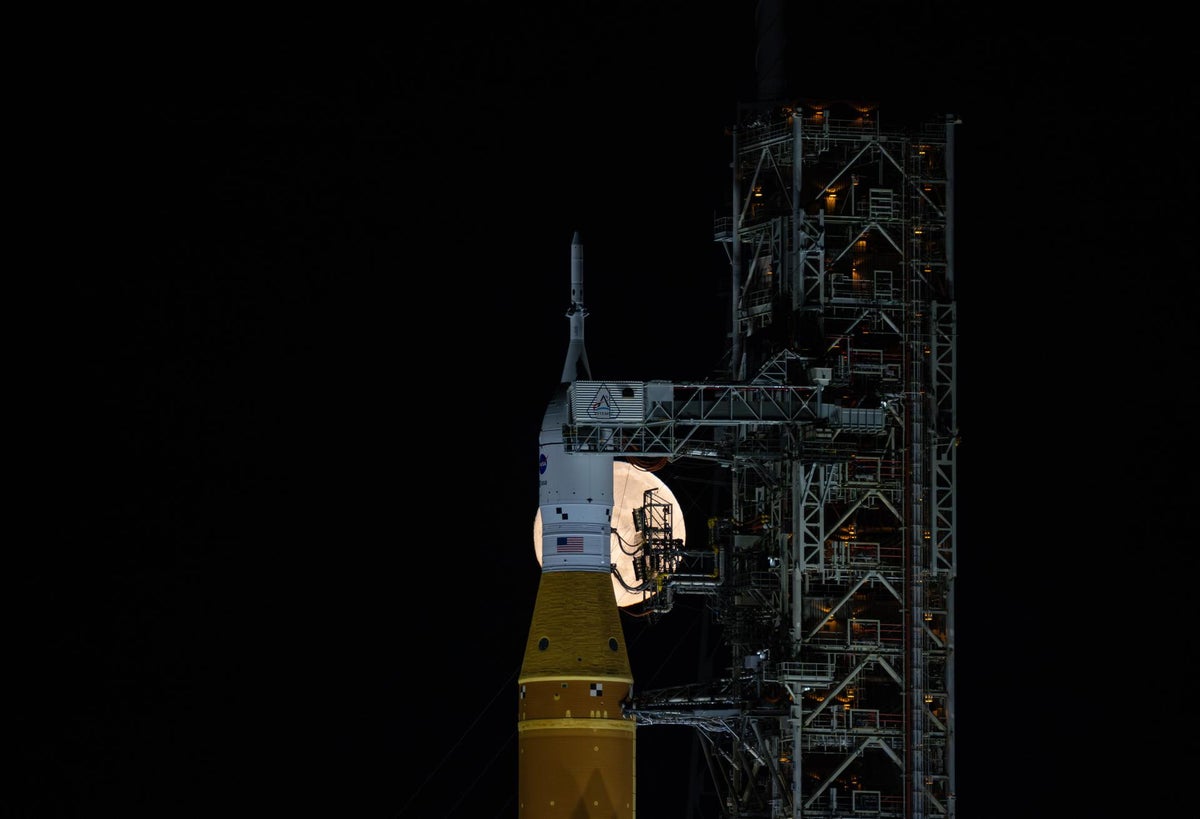
"Heat shields are crucial: when spacecraft reenter Earth's atmosphere, they heat up, burning through the sky like a shooting star. Without a protective layer, any living thing inside a returning spacecraft would be exposed to temperatures about half as hot as the surface of the sun, or 5,000 degrees Fahrenheit (2,760 degrees Celsius). In Orion's case, the heat shield is made of Avcoatthe same material that protected the Apollo capsules, with a key structural difference."
"But Orion has a potential flawin 2022, during Artemis I, NASA's last (uncrewed) mission to the moon, the Orion capsule's heat shield came back to Earth with unexpectedly extensive damage. For the Apollo spacecraft, the heat shield had a honeycomblike structure with more than 360,000 cells, each of which was filled with Avcoat. Orion's heat shield, by contrast, is made up of just under 200 large tiles of Avcoat. Together, they form a 16.5-foot-diameter panel that's bolted onto the spacecraft."
NASA could launch Artemis II as soon as March, sending four astronauts on a loop around the moon and back aboard the Orion capsule launched by the Space Launch System rocket. NASA expresses confidence that the mission will be successful and safe, but experts and former astronauts debate the spacecraft's safety after unexpectedly extensive heat-shield damage on Artemis I. Heat shields protect against reentry temperatures of about 5,000 °F (2,760 °C). Orion uses Avcoat like Apollo, but replaces Apollo's 360,000-cell honeycomb filled design with just under 200 large Avcoat tiles bolted as a 16.5-foot-diameter panel.
Read at www.scientificamerican.com
Unable to calculate read time
Collection
[
|
...
]