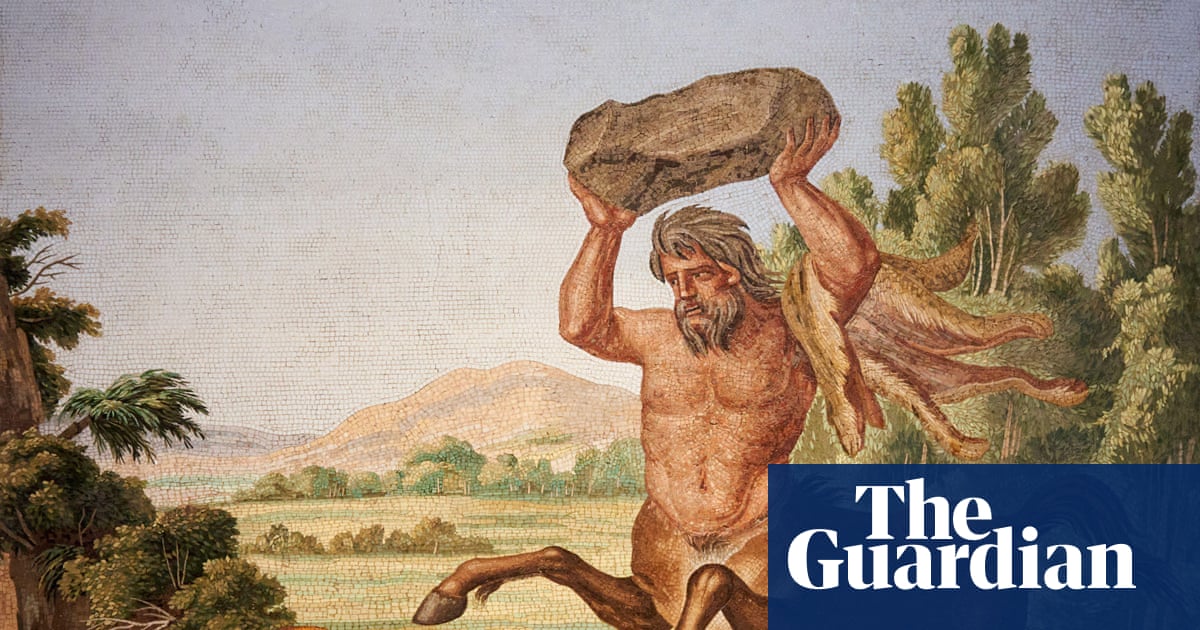
"The prophet Ezekiel once claimed to have seen four beasts emerge from a burning cloud, sparkling like the colour of burnished brass. Each had wings and four faces: that of a man, a lion, an ox and an eagle. Similarly, a creature called Buraq, something between a mule and a donkey with wings and a human face, was said to have carried the prophet Muhammad on his journeys; while the ancient Greeks gave us the centaur, the mythical human-horse hybrid recently rebooted by JK Rowling"
"According to this forecast, species shaped by billions of years of natural selection will soon have to share their world with artificial versions designed and constructed by humans, with dramatic consequences. Synthetic species could be harnessed to produce biofuels, medicines, biosensors, drought-resistant crops and countless other innovations, he writes. We may grow houses rather than build them. This is the stuff of science fiction."
"Nevertheless, London-born and Oxbridge-educated Woolfson founder of the San Diego genetics company Genyro and author of two previous popular science books is adamant that the nature of life on Earth is about to be transformed. He styles his book as a wake-up call. We are facing a second Genesis that could bring great benefits but also have profoundly grim, unsettling consequences."
Human imagination has long combined human and animal traits into hybrid creatures. Rapid advances in biological engineering will enable the construction of artificial species that can coexist with naturally evolved organisms. These synthetic species could supply biofuels, medicines, biosensors, drought-resistant crops and myriad other applications, and could even alter construction practices by growing structures. The emergence of designed life forms represents a fundamental transformation of life on Earth with the potential for great benefits alongside profoundly unsettling dangers. Recent technological inventions have moved humanity to the threshold of this biological revolution.
Read at www.theguardian.com
Unable to calculate read time
Collection
[
|
...
]