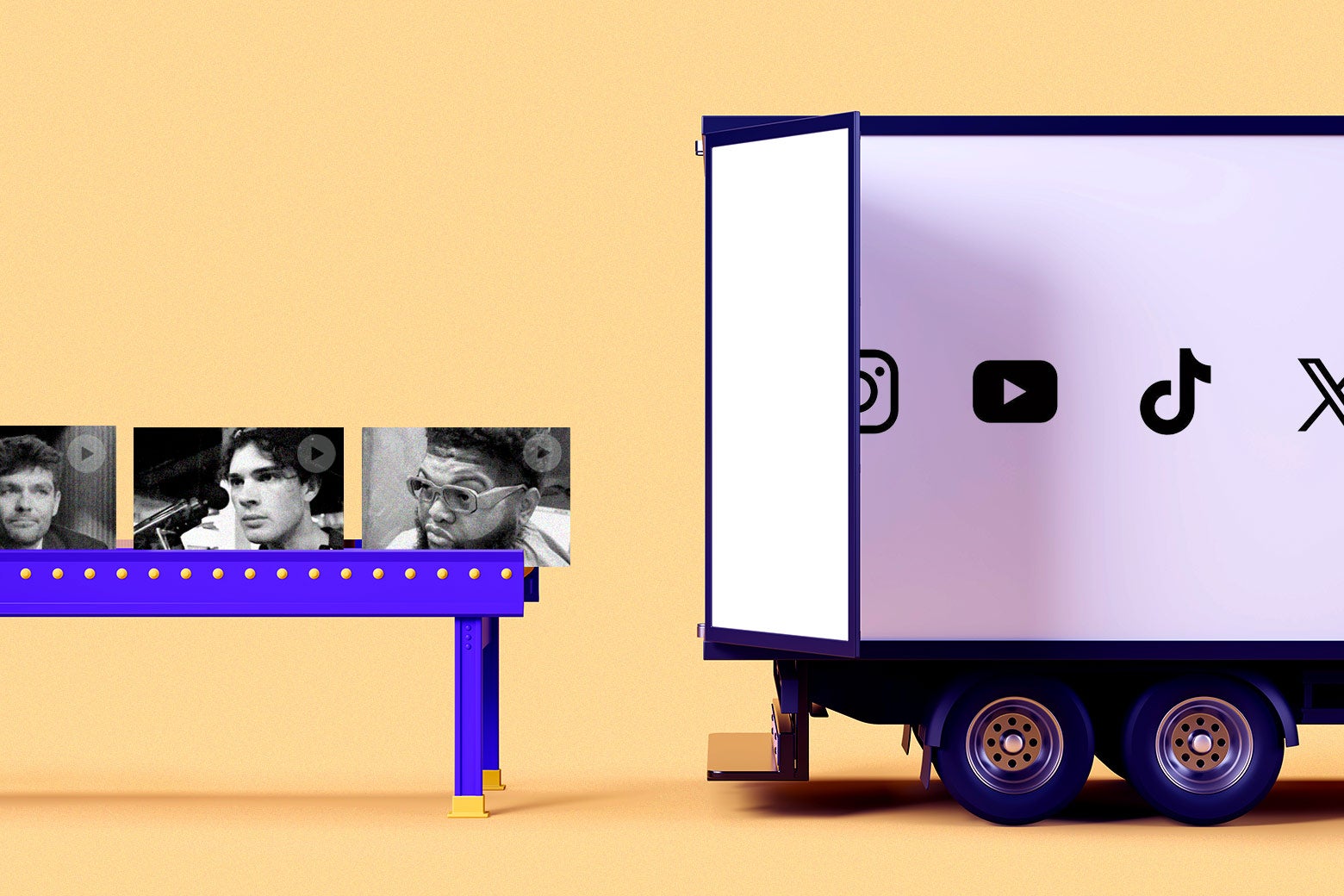
"The practice is straightforward: Take a long-form video, like a Twitch stream or podcast video, and cut it into a (potentially) viral clip to be shared on social media."
"Companies that hire clippers to flood the feeds-on behalf of clients who could be individual influencers or big-name orgs such as, allegedly, Kalshi and the NFL-will often have their own 'fake' pages and aggregation accounts."
"The best part: The clippers work for cheap, and none of the promotional aspects need to be publicly disclosed, thanks to a federal-regulation loophole that relaxes transparency standards on ads that don't sell tangible products."
Viral video clipping is a technique reshaping cultural trends by taking long-form content and creating short, shareable clips. This method allows influencers and brands to engage audiences effectively without traditional advertising. Companies hire clippers to manage multiple accounts, creating a network of 'fake' pages to amplify reach. The practice thrives on a loophole in federal regulations that reduces transparency in promotional content, enabling widespread influence with minimal resources. This approach has become a significant part of the online experience in 2026.
Read at Slate Magazine
Unable to calculate read time
Collection
[
|
...
]