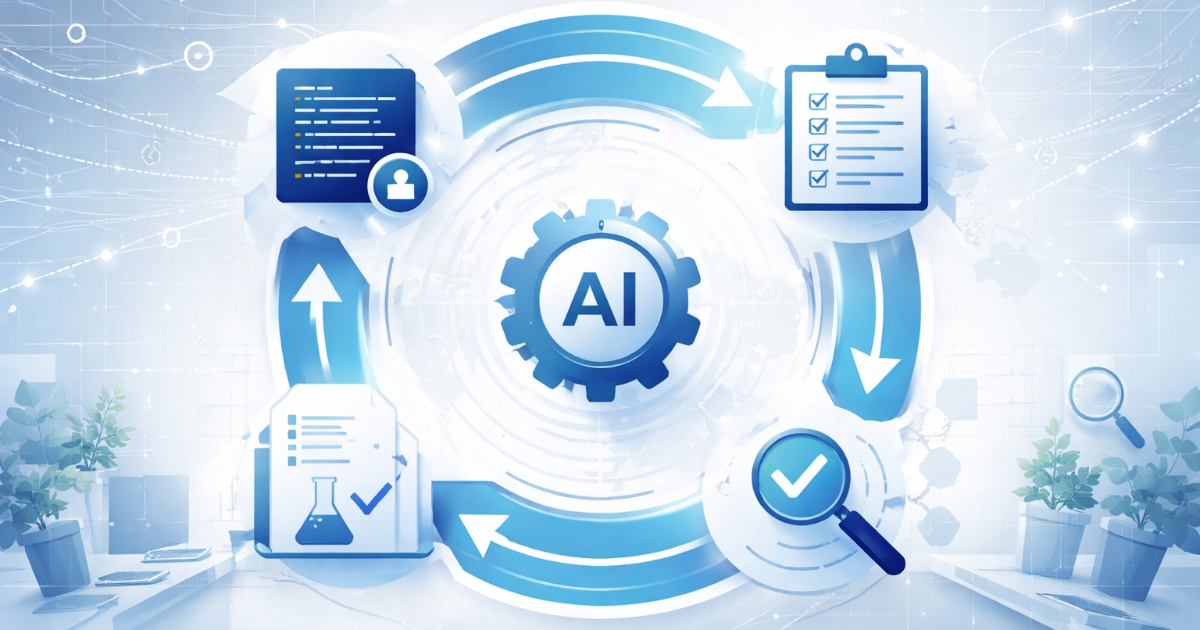
"Morris suggests the third model may prove particularly useful for software engineering, where developers focus on building testing frameworks, constraints, and evaluation pipelines that shape how AI agents operate rather than inspecting every generated line of code."
"In this architecture, the output of the system is often not simply a chat response but code written or modified directly on the machine, produced through iterative tool use and feedback cycles."
"Stack Overflow discussions and commentary have highlighted concerns that productivity gains from generative AI tools can come with trade-offs in maintainability and technical debt, particularly when generated code requires significant review."
Software development is evolving toward three distinct human-AI interaction models: in-the-loop (developers review each output), out-of-the-loop (autonomous systems), and on-the-loop (humans design guiding mechanisms). The on-the-loop model appears most practical for software engineering, where developers build testing frameworks, constraints, and evaluation pipelines that shape AI agent behavior rather than inspecting individual code lines. Organizations experiment with coding agents through architectures like OpenAI's Codex system, which coordinates interactions between users, models, and external tools through iterative feedback cycles. However, developer sentiment remains mixed, with concerns about productivity gains potentially introducing maintainability issues and technical debt in AI-generated code.
#ai-assisted-software-engineering #human-ai-collaboration-models #coding-agents #developer-productivity #code-quality-and-maintainability
Read at InfoQ
Unable to calculate read time
Collection
[
|
...
]