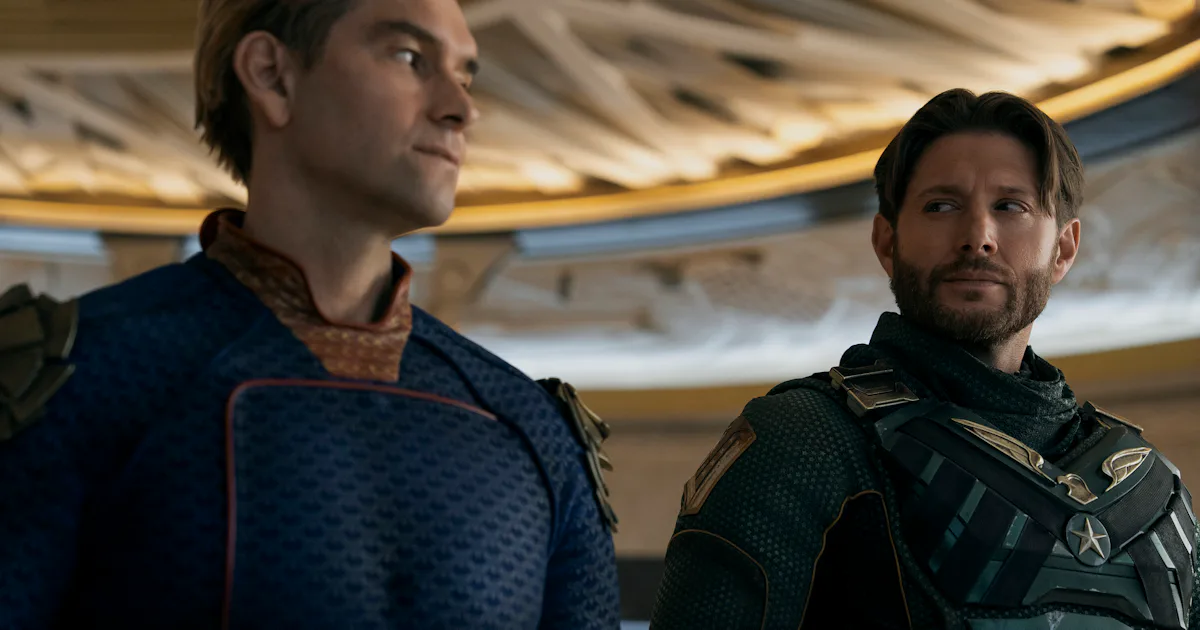
"There are plenty of times in the past seven years when I've fought the instinct to turn off , get up off my couch, and never think about the show again. That I've lasted this long is thanks to a myriad of things: I write about superhero stuff for a living, my partner loves the show, etc. But I also, deep down, kinda care about the characters. Prime Video's God-forsaken supe satire has always had a way with its heroes and its villains. Whenever I felt my hand itching for the remote, they'd dangle a juicy morsel of pathos right under my nose."
"With Season 5, I'm convinced there's no humanity left. Or if there is, I just don't care anymore. And that's something I never thought I'd say, given this season's introduction of a drug that can make its terrifying Superman stand-in, Homelander (Antony Starr), truly omnipotent, or a virus powerful enough to stop him and every other supe, permanently. At this point, though, Homelander can have his immortality; the Boys can unleash the plague that will surely murder every supe on the planet and maybe some humans along with it."
"Where The Boys once satirized our world, it's long become a caricature of itself. Prime Video It's not that I've suddenly become Butcher-pilled and am actively rooting for a superhero genocide. But if the minds behind The Boys don't care about delivering a finale that honors any form of investment, why should I? Across six scattershot episodes, showrunner Eric Kripke and his team of writers have systematically stripped this once cutting-edge series of everything that made it so inventive."
The past seven years of viewing were sustained by care for characters and moments of pathos amid graphic violence and immature sex jokes. Season 5 introduces a drug that makes Homelander truly omnipotent and a virus capable of permanently stopping him and other supes. The stakes shift toward mass death, with the narrator feeling no concern for what happens to anyone. The series, once satirizing the real world, now feels like a caricature of itself. The finale is portrayed as lacking payoff, and the writing is described as stripping away what made the show inventive, leaving only limited emotional glimmers in long-term relationships.
Read at Inverse
Unable to calculate read time
Collection
[
|
...
]