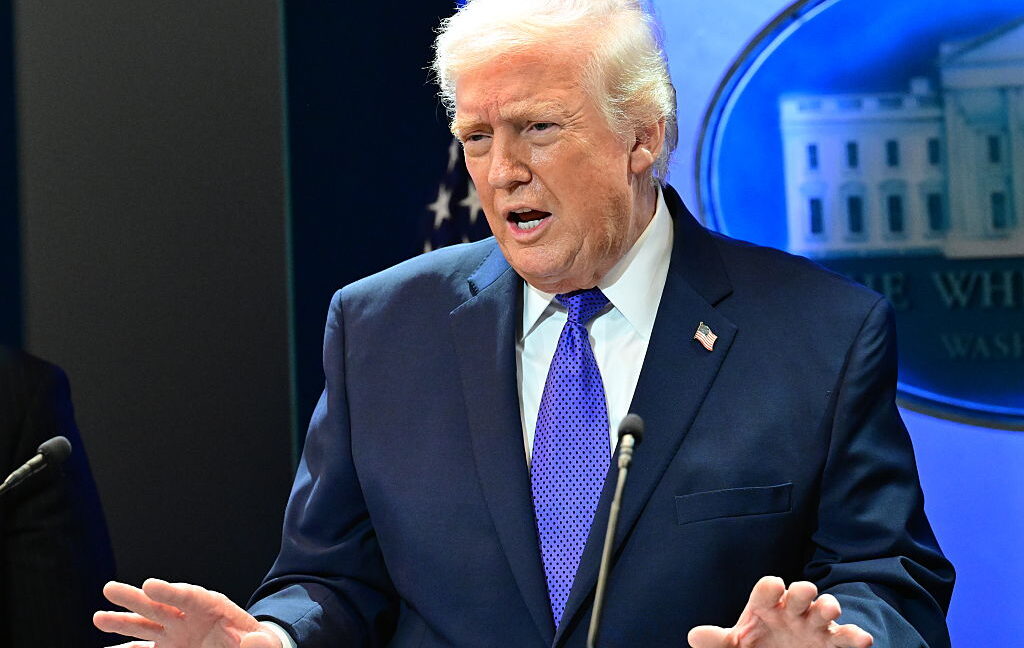
"The day after the Supreme Court struck down a set of Donald Trump's emergency tariffs, the president quickly imposed another, using a never-before-invoked provision of a decades-old trade law to order a global 10 percent tariff on most imports. Now, that second set of tariffs has been deemed illegal, and there are no more emergency levers that Trump can pull to try to replace them any time soon. That leaves Trump without much negotiation leverage a week before he's set to meet with China's President Xi Jinping, who already appeared to have the upper hand heading into talks."
"For Trump, when the US Court of International Trade invalidated his global tariffs, his key trade policy-which relies on imposing tariffs to supposedly drive more manufacturing into the US-was put at risk of being gutted. Moving forward, Trump won't be able to rely on the law to collect the global tariffs. Lucky for Trump, the international trade court's narrow ruling did not require a universal injunction blocking tariffs nationwide, and it limited refunds to only importer plaintiffs who sued."
"That could help the Trump administration avoid even more chaos after Customs and Border Patrol recently began processing refund requests to comply with the Supreme Court ruling. However, it's unclear if the court's ruling could prompt additional lawsuits from other importers that are seeking refunds, as well as anyone who can argue they have been harmed by the global tariffs, such as non-importer customers who can prove they paid higher prices linked to tariffs."
"Most likely Trump will appeal the ruling. But in the meantime, it likely puts immediate pressure on his administration to quickly conclude investigations into tariff regimes that may be available under other statutes. That could take weeks, if not months, analysts expect. On Friday, Trump "criticized the judges" at the international trade cou"
A second set of global 10% tariffs was imposed after emergency tariffs were invalidated, using a rarely used provision of an older trade law. The later tariffs were also ruled illegal, leaving no further emergency mechanisms available in the near term. This reduces leverage ahead of a planned meeting with China’s President Xi Jinping, where China already had an advantage. The invalidation threatens a key trade strategy aimed at shifting manufacturing into the United States through tariffs. Refunds are limited to importer plaintiffs who sued, and a nationwide injunction was not required, which may reduce immediate disruption. Additional lawsuits for refunds remain possible, including claims by customers harmed through higher prices. The administration may appeal and must pursue alternative statutory investigations, which could take weeks or months.
Read at Ars Technica
Unable to calculate read time
Collection
[
|
...
]